
Under
the patronage of Prof. Yasser Magdy Hatata, President of Fayoum University, and
the supervision of Prof. Assem Fouad El-Essawy, Vice President for Community
Service and Environmental Development, Prof. Sherif El-Attar, Vice President
for Education and Student Affairs and Supervisor of Faculty of Dar Al-Uloom,
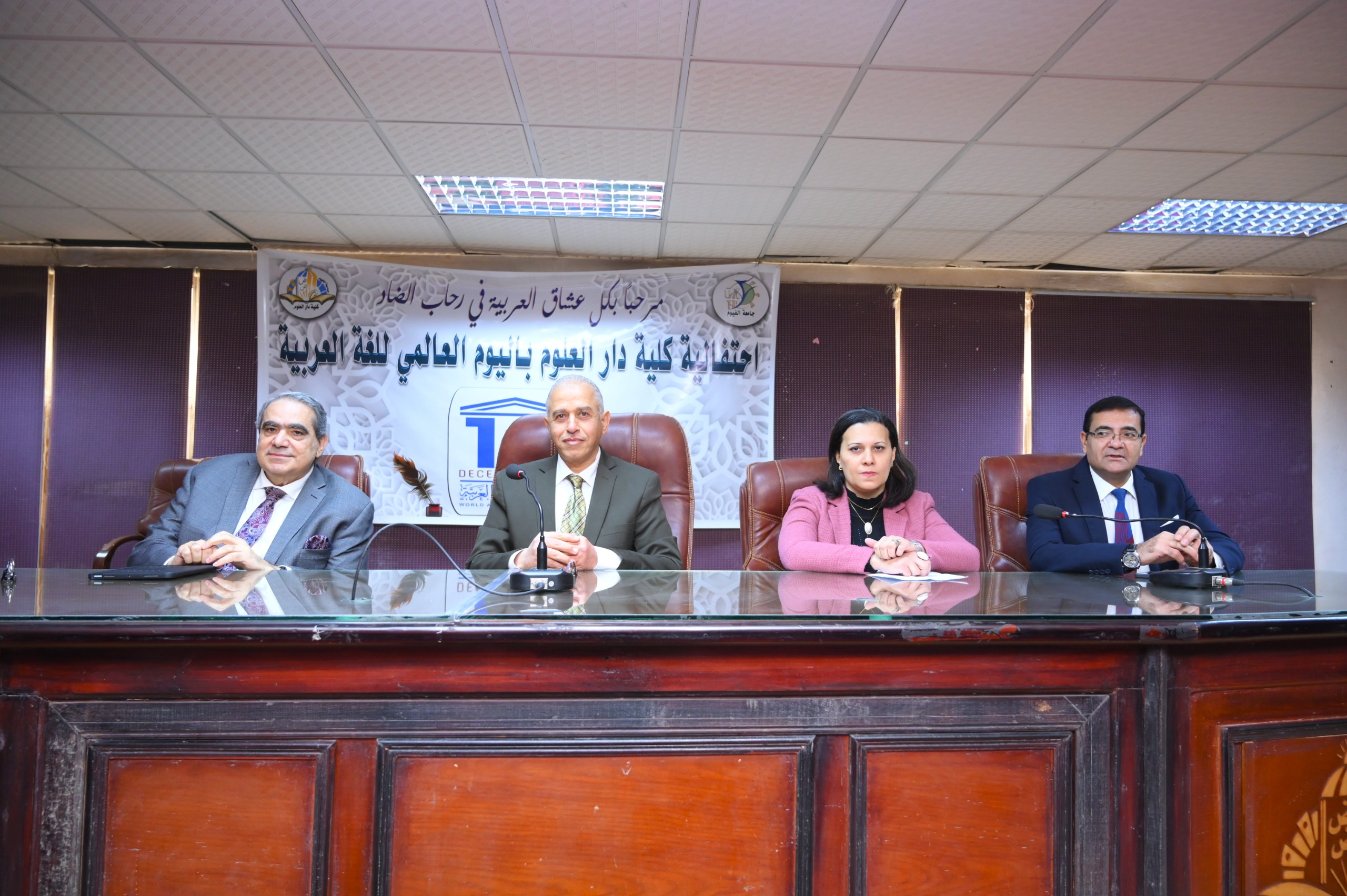
attended the symposium organized by the Faculty in cooperation with the Fayoum
Heritage and Civilization Center, on the occasion of the International Day of
the Arabic Language.
The
event was also attended by Prof. Essam Ameria, Vice Dean for Community Service
and Environmental Developmen, Prof. Salah El-Ashiry, Vice Dean for Education
and Student Affairs, and a number of faculty members, administrators, and
students, on Sunday, December 21, 2025, in the Faculty's conference hall.
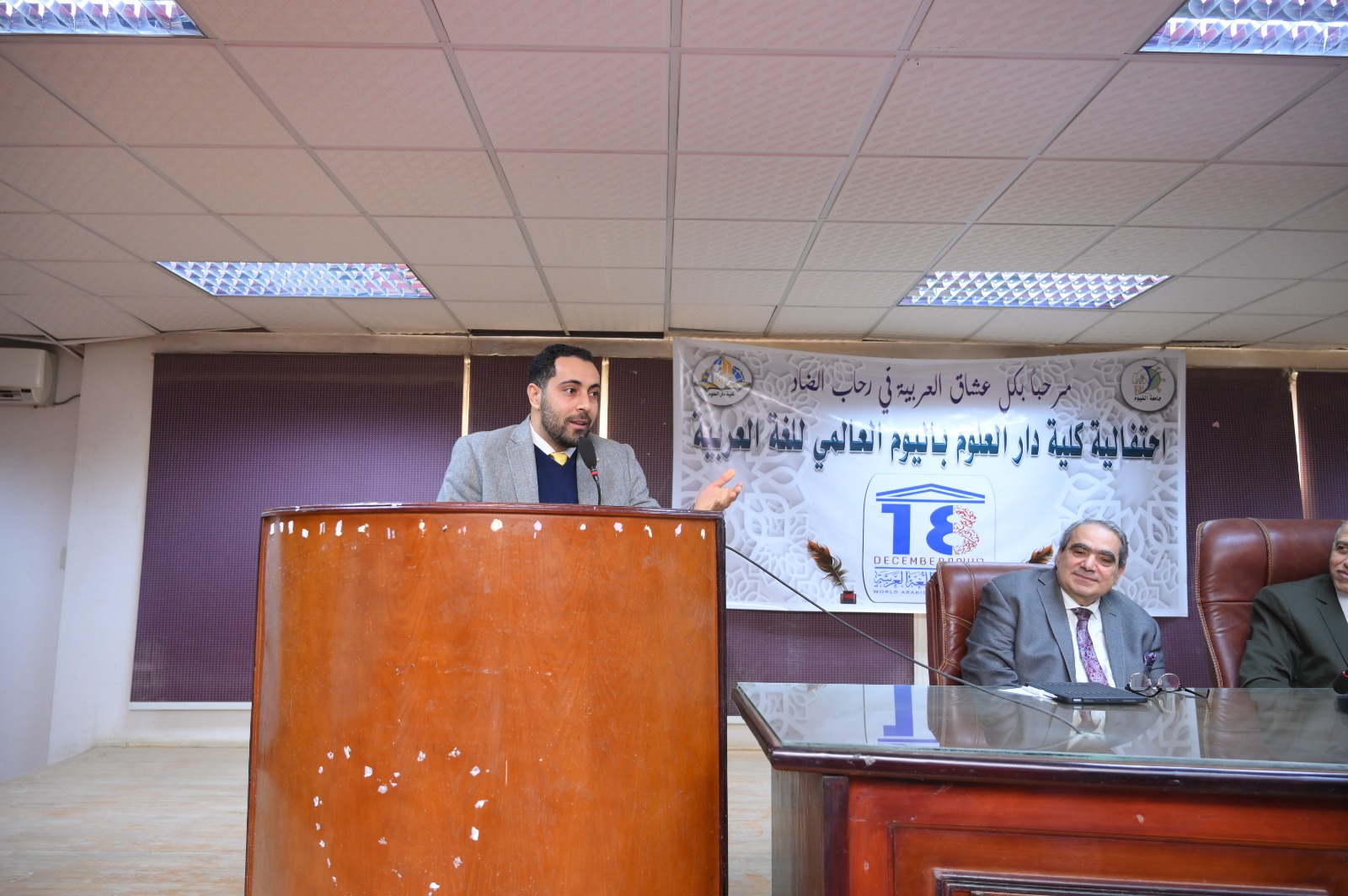
The
symposium featured presentations by Prof. Mamoun Wageh, member of the Arabic
Language Academy and former Dean of the Faculty, and Prof. Nevin Kamal,
Professor at the Faculty of Archaeology and Director of the Fayoum Heritage and
Civilization Center.
Prof.
Sherif Al-Attar pointed out that the Arabic language has always been a bridge
and a vessel of identity, emphasizing that it is not merely a tool for
communication, but also the language of the Holy Quran, philosophy, literature,
and the repository of sciences that have influenced various aspects of human
civilization.
He
stressed the importance of paying attention to the Arabic language, studying
it, delving into its sciences, and working to connect future generations to it,
thus ensuring its continued status as one of the world's powerful languages,
especially given its richness and diverse fields, including literature,
rhetoric, grammar, morphology, poetry, and other arts and sciences.
For his
part, Prof. Essam Ameria explained that World Arabic Language Day falls on December
18th of each year, commemorating the United Nations General Assembly
resolution of 1973, which adopted Arabic as the sixth official language of the
organization.
He
added that a number of universities, language academies, and cultural
institutions in the Arab world celebrate this day alongside UNESCO, noting that
the number of Arabic speakers is approximately 500 million, whether as a first
or second language, in addition to its use by nearly two billion Muslims in
performing their prayers and religious rituals.
Prof.
Mamoun Wajih began his talk by discussing the status of the Arabic language
among the world's languages, highlighting its expressive beauty, rich
literature, and profound linguistic knowledge. He then addressed the three
phases the Arabic language has undergone: the phase of flourishing, the phase
of decline and fragmentation, and the phase of revival.
He
emphasized that the phase of flourishing witnessed the spread of the Arabic
language following the revelation of the Holy Quran, reaching its zenith during
the Abbasid era. At that time, it expanded beyond its local confines in the
Arabian Peninsula, spreading east and west, reaching as far as Andalusia and
China. He pointed to the significant role played by the conquerors, along with
trade relations and the development of commerce, particularly in East Asia, in
disseminating the Arabic language.
He also
reviewed the revival of the Arabic language through the establishment of
language academies in Egypt, Iraq, and Syria, and the focus on Arabizing the
sciences, which contributed to the return of the Arabic language to its
civilizational path and its renewed flourishing.
Prof.
Nevin Kamal emphasized that this day represents an occasion to rediscover the
Arabic language and delve into the depths of its secrets, and to reaffirm its
pivotal role in consolidating Arab identity. She pointed out that the Arabic
language has never been merely a means of communication, but has always been
and remains a repository of heritage, a memory of civilization, and a bridge
connecting the past, present, and future. She addressed the importance of the
Arabic language in preserving the nation's history and documenting its
sciences, literature, arts, and customs, as it has been the faithful guardian
of cultural heritage. Thanks to it, manuscripts, stories, proverbs, and
everything that constitutes the features of our ancient civilization have
reached us.
In
closing, He expressed her hope that the Arabic language will remain alive on
our tongues, firmly rooted in our minds, and present in our hearts, as the
symbol of belonging and identity.
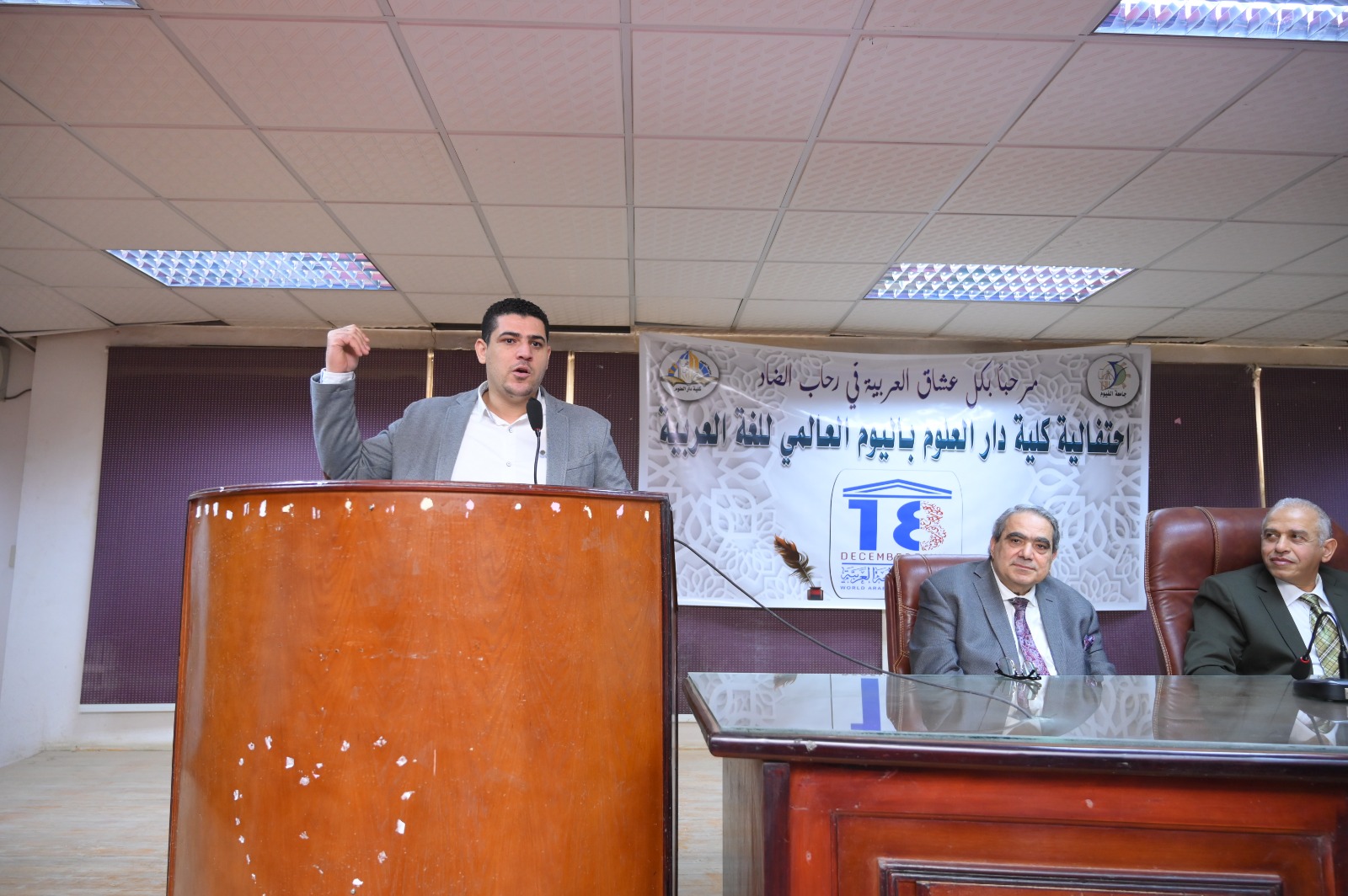
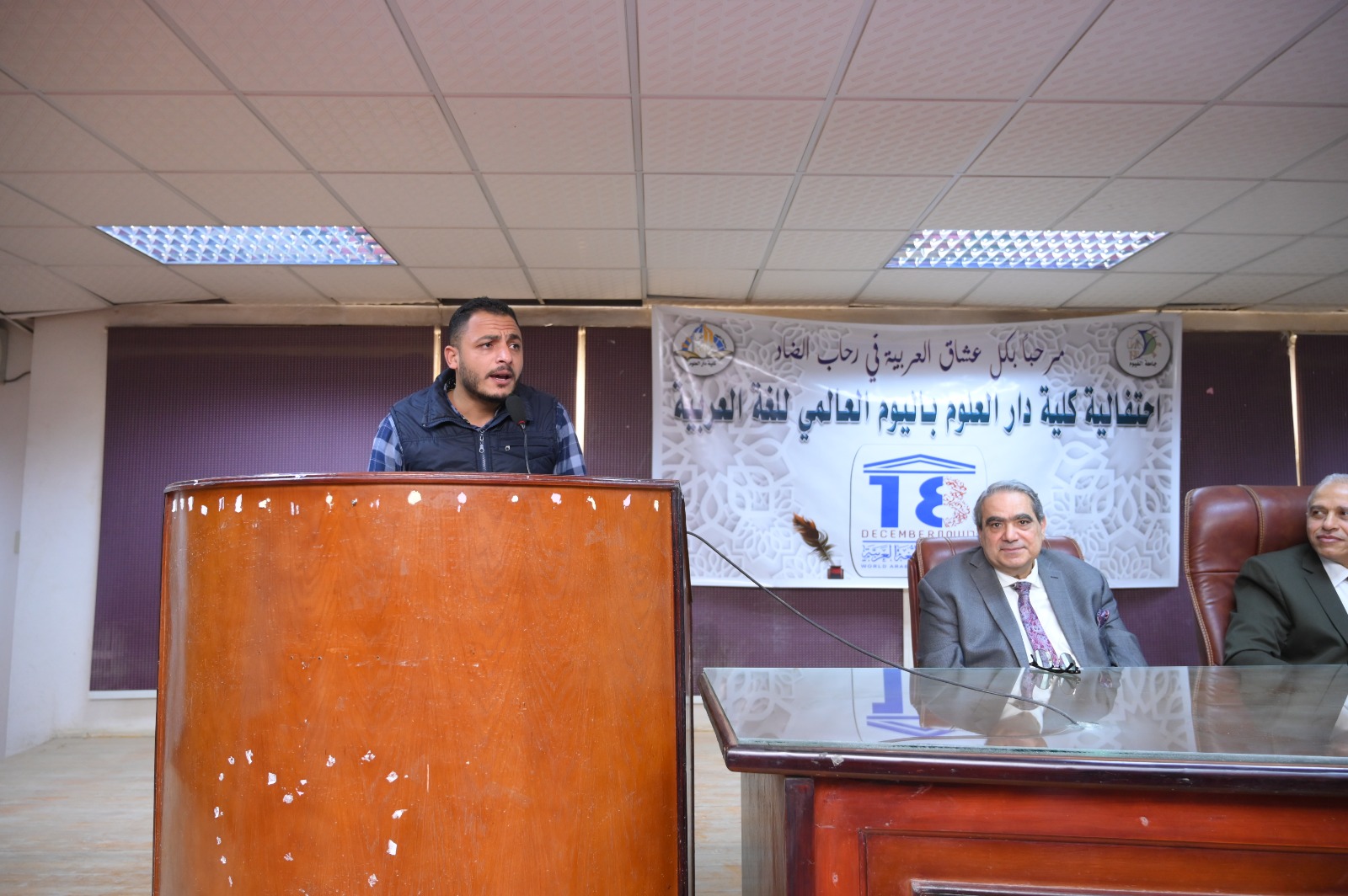
Several poets also presented a
selection of elegant poems that were well-received by the audience.
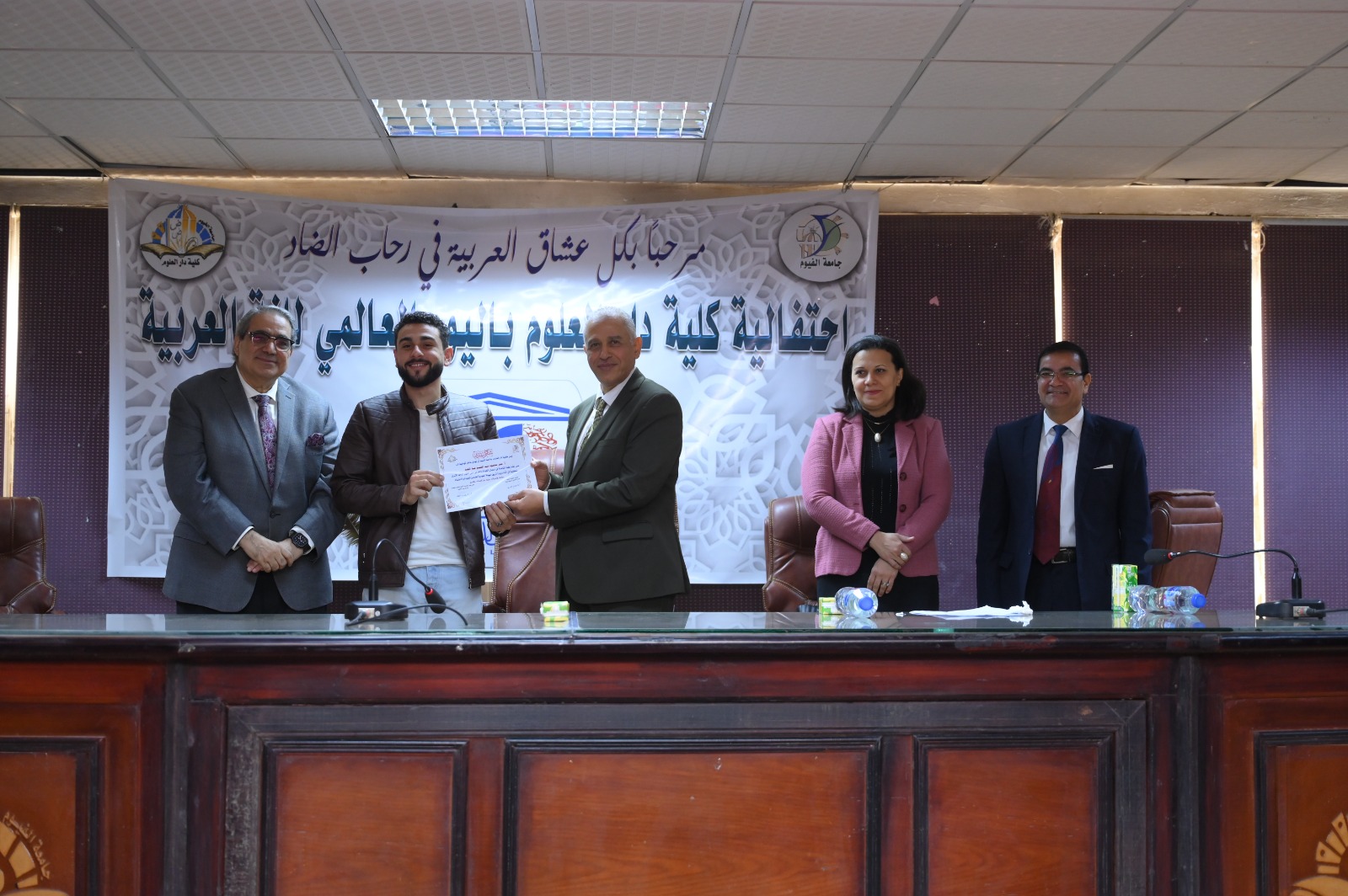
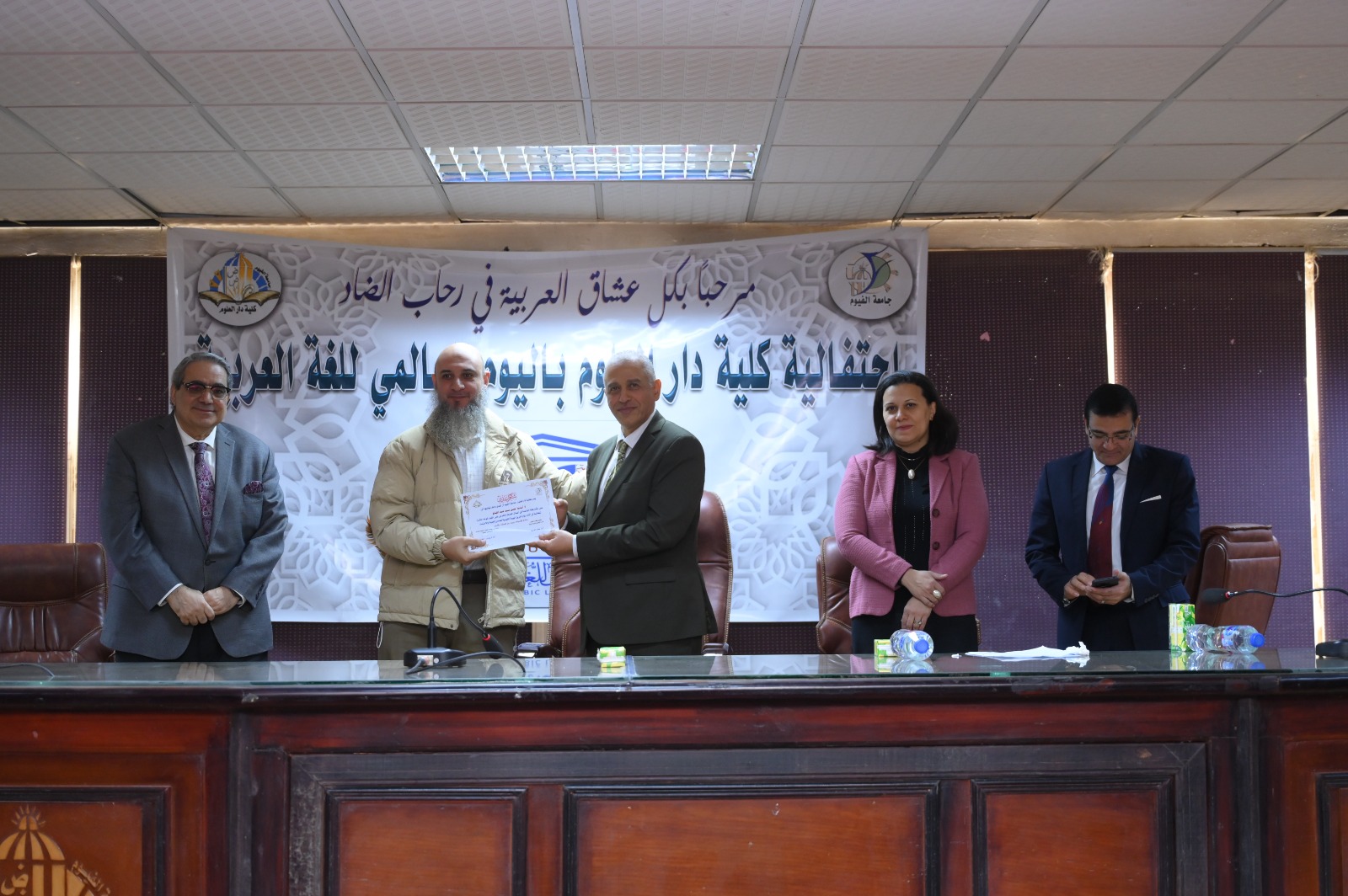
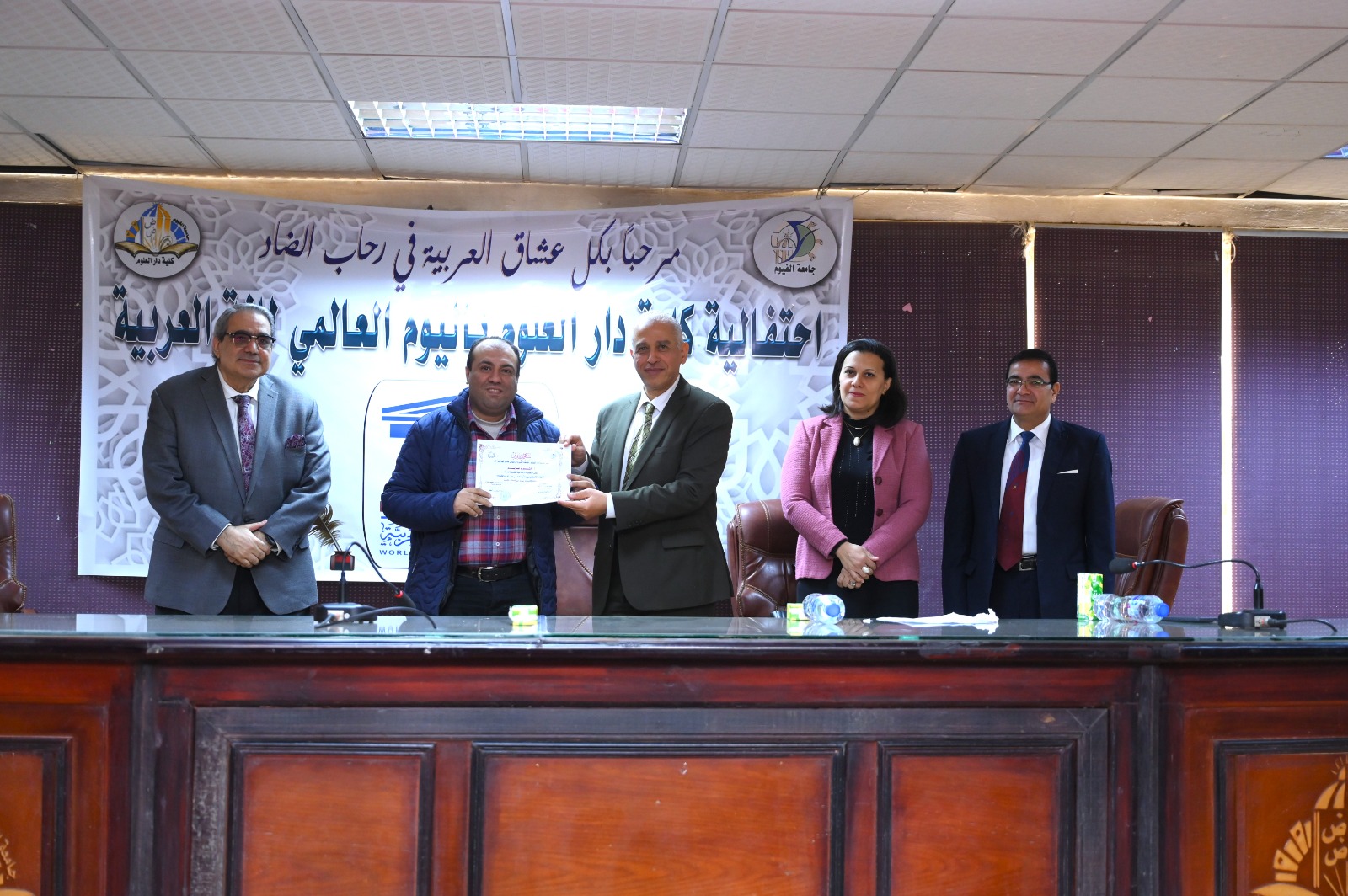
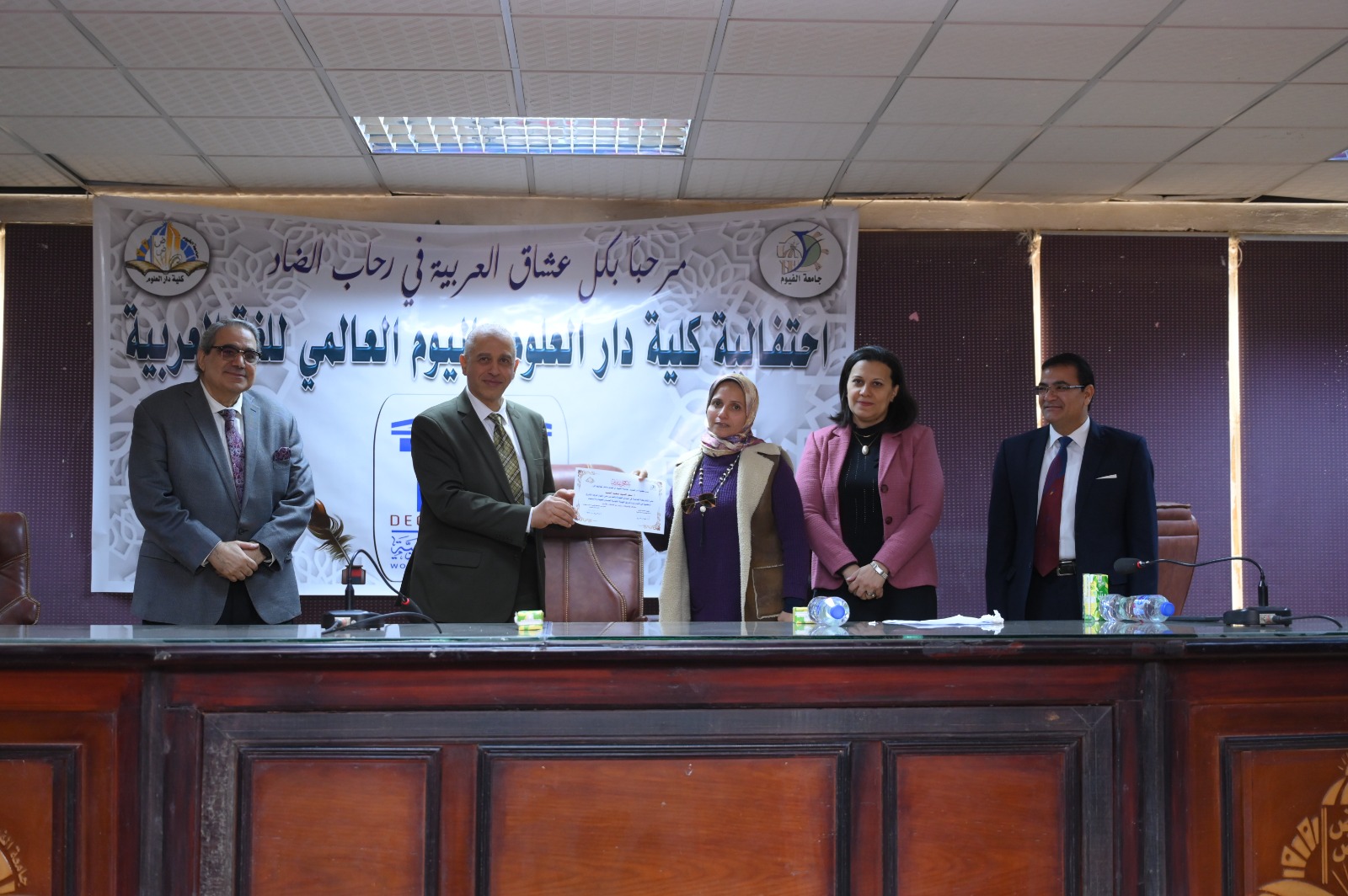
At the
conclusion of the ceremony, a number of faculty and administrative staff
members were honored in recognition of their outstanding contributions.