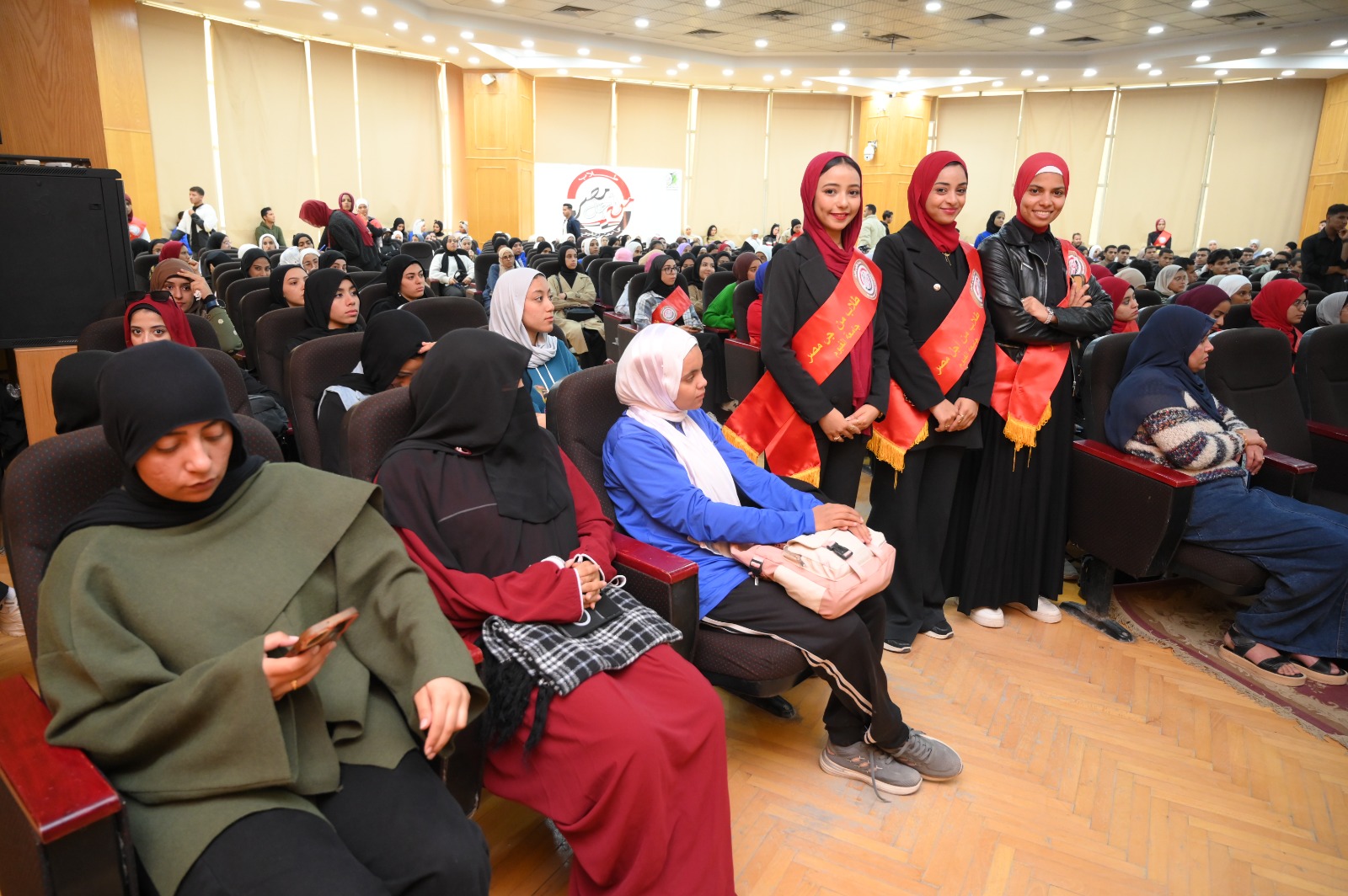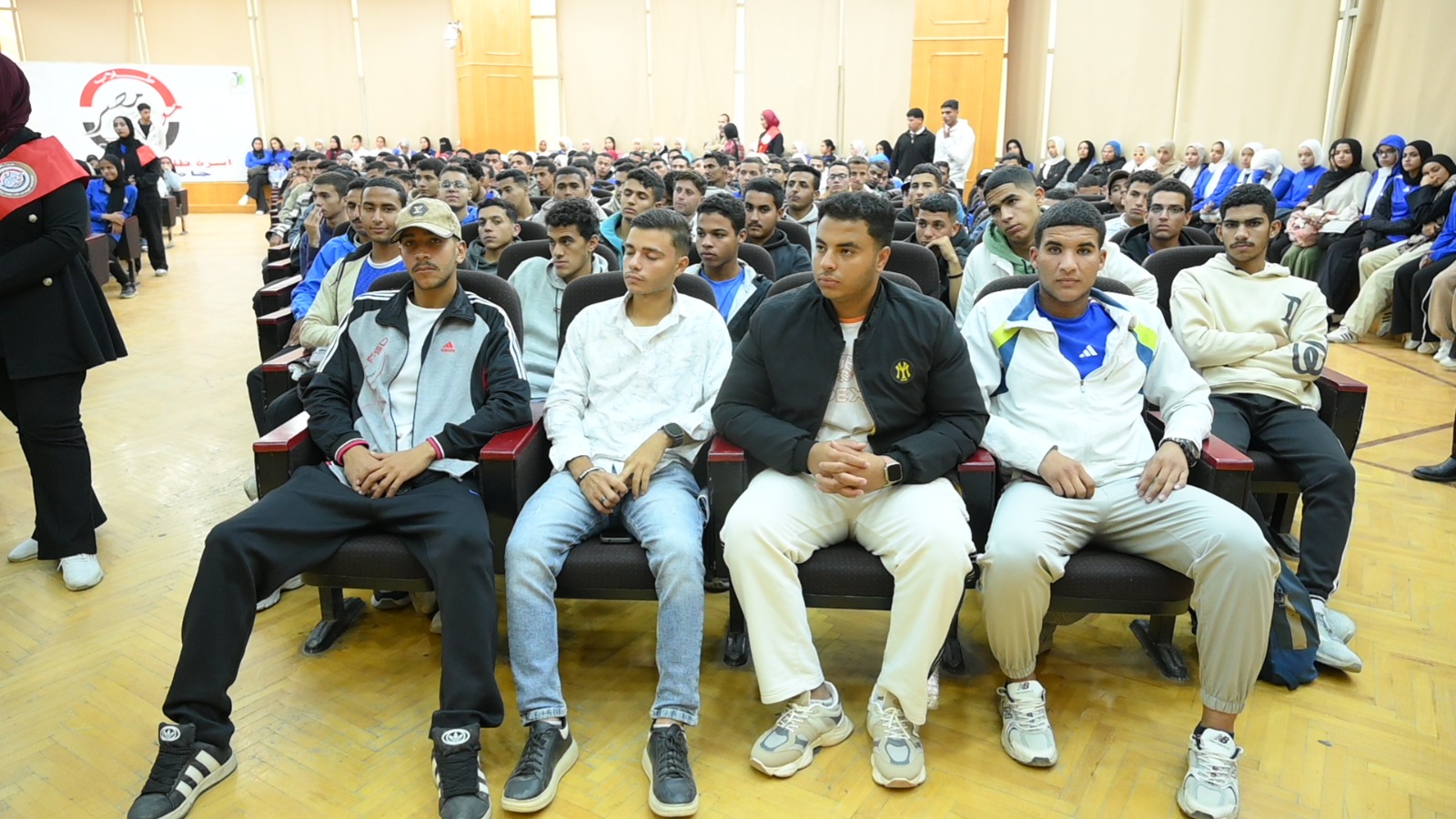



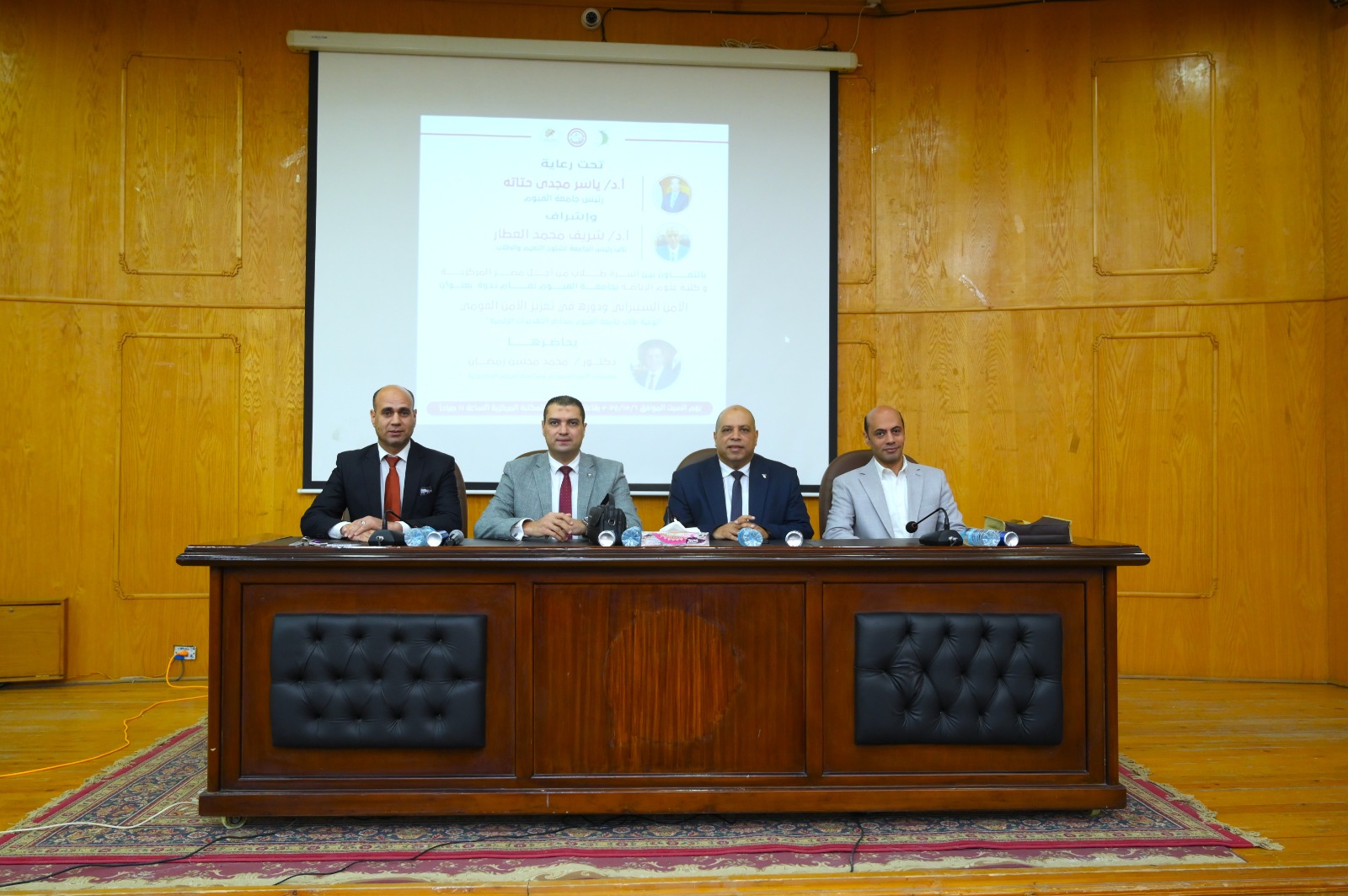
Under
the patronage of Prof. Yasser Magdy Hatata, President of Fayoum University, and
the supervision of Prof. Sherif Mohamed El-Attar, Vice President for Education
and Student Affairs, a seminar entitled "Cybersecurity and its Role in
Enhancing National Security – Raising Awareness among Fayoum University
Students about the Dangers of Digital Threats" was held. This seminar was
a collaborative effort between the Students for Egypt family and the Faculty of
Sports Science.
The seminar
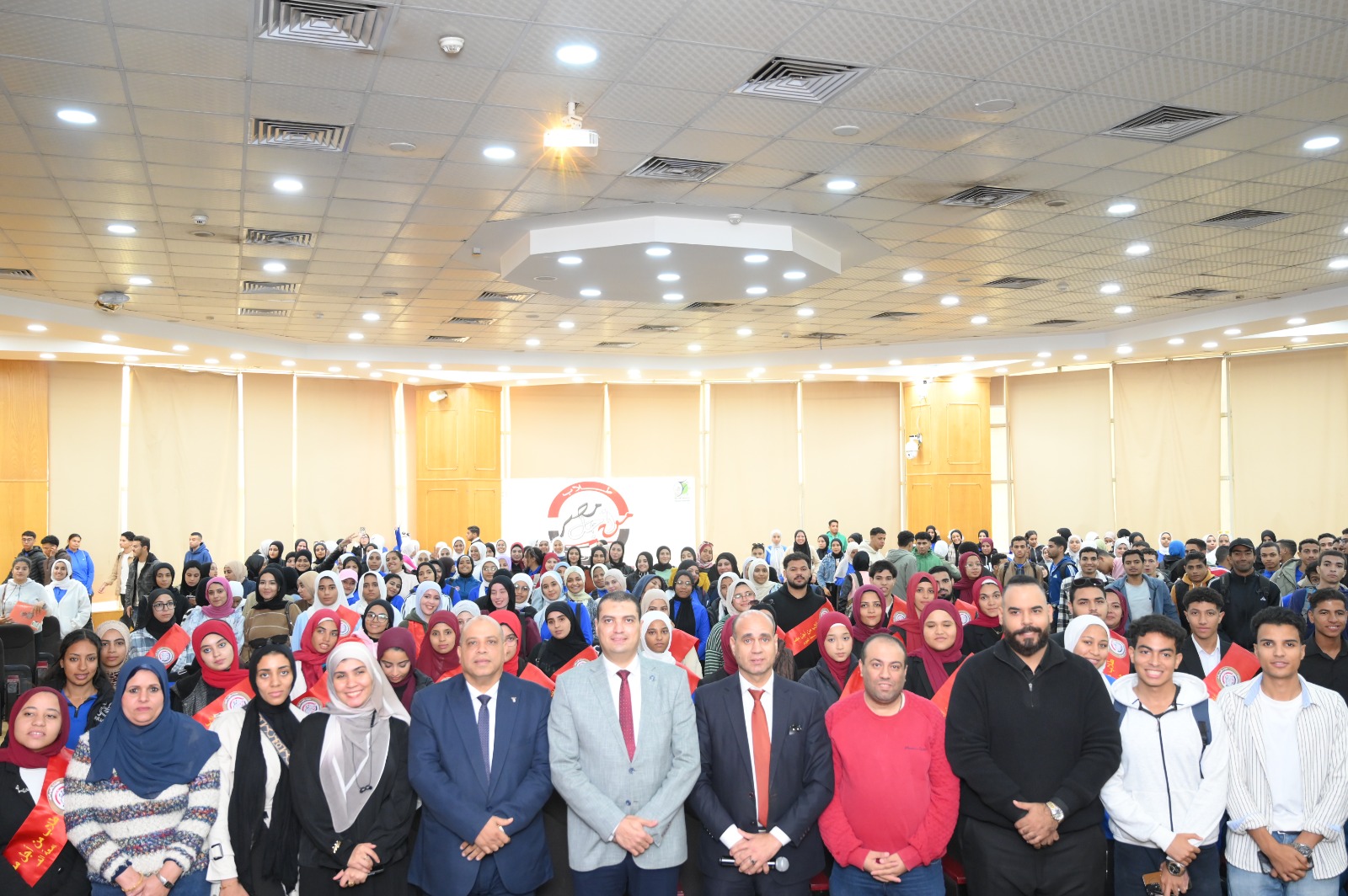
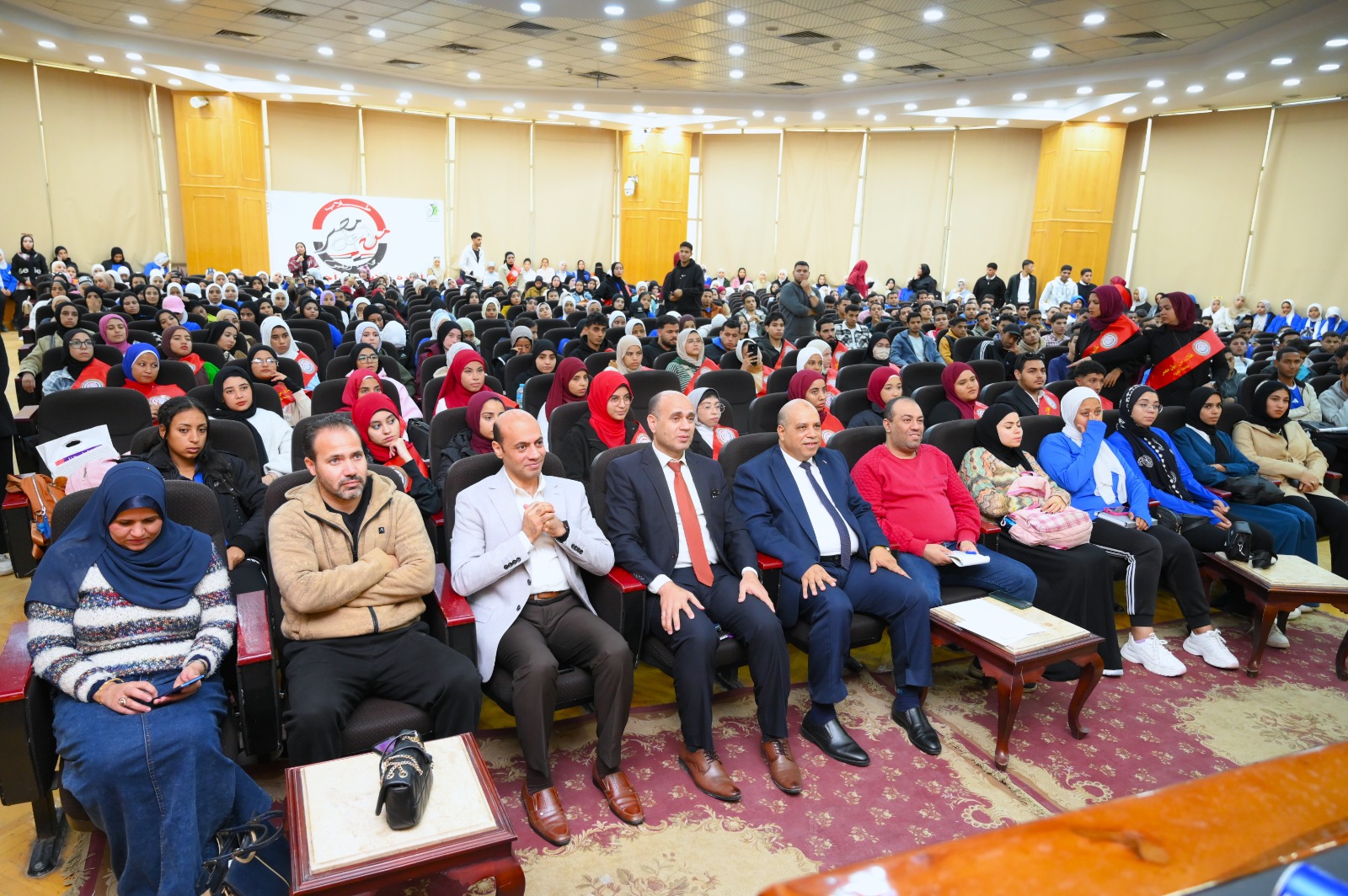
was attended by Prof. Ashraf El-Abbasy, Dean of the Faculty of Sports Science;
Prof. Wael Tobar, General Coordinator of Student Activities at the University;
Dr. Mohamed Kamal, General Coordinator of the Students for Egypt family; and a
number of faculty members, administrators, and students.
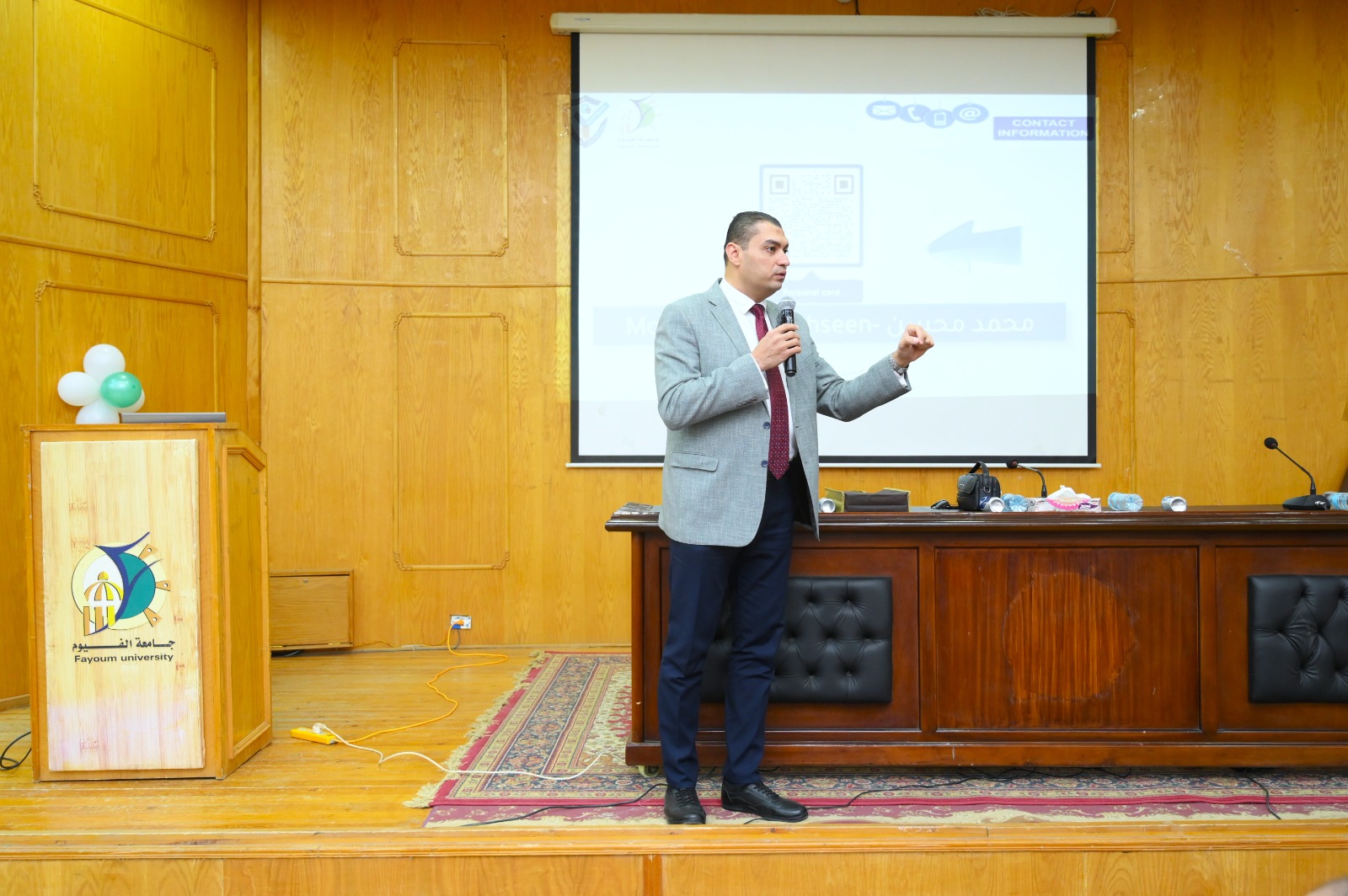
The
seminar was presented by Dr. Mohamed Mohsen Ramadan, a consultant specializing
in cybersecurity and combating cybercrime. It took place on Saturday, December
6, 2025, at the University's Central Library.
Prof.
Ashraf El-Abbasy emphasized that the Faculty of Sports Science aims to achieve
two fundamental pillars: education and extracurricular activities. He stressed
that student activities are a cornerstone of the faculty, urging students to
actively participate in various cultural, sporting, and artistic events. He
noted the faculty's commitment to providing all forms of moral and material
support to encourage students to compete and participate in different
competitions. He added that the seminar focused on cybersecurity concepts and
data protection methods.
Prof.
Wael Tobar explained that we live in an era where the value of information and
data is increasing. He stated that the seminar addressed essential information
to help students protect the privacy of their data, photos, and documents
against any hacking attempts, especially since cybersecurity has become a
"topic of the hour."
Prof.
Mohamed Kamal added that the world is witnessing a massive influx of
information, making the need for digital protection more urgent. He pointed out
that cybersecurity rests on several key pillars, including the role of
individuals and the necessity of raising their awareness of data protection
methods, institutional procedures for protecting systems, and security
technologies such as encryption, anti-spyware, and antivirus software.
During
the seminar, Dr. Mohamed Mohsen addressed the main themes, which included:
security and digital awareness; digital awareness warfare; humanity's battle
against manipulation algorithms; digital targeting methods; defining social
engineering; cyber threats posed by artificial intelligence; and how to build a
secure digital society in the age of artificial intelligence.
He also
discussed a range of key definitions, including: digital transformation as the
process of reshaping operations, services, and culture within organizations
using digital technologies to enhance efficiency and improve performance;
digitization as the conversion of analog documents and materials into a digital
format that can be stored and processed; cybersecurity as the protection of
devices, systems, networks, and data from cyberattacks, in addition to
protection through tools such as firewalls, antivirus software, and threat
detection systems; and artificial intelligence, which encompasses technologies
aimed at creating systems that mimic human capabilities such as learning and
decision-making.
He
pointed out that technology has become an essential part of human life since
the First Industrial Revolution and continues to be so today in the age of
artificial intelligence. He emphasized that modern warfare is no longer
traditional but relies on electronic armies that include the internet, social
media, and the dissemination of misleading content.
He
added that the Egyptian state has a 2030 vision and strategy for information
security, which includes data protection, the establishment of a robust
infrastructure, and the creation of a massive data repository to ensure its
integrity. He stressed that data has become the most valuable resource in the
digital world.
He
warned against online scams and fraud, advising young women to protect their
personal data and photos, and to seek help from their families and then the
relevant security authorities if they are subjected to any form of online
blackmail.
He also
explained the concept of social engineering as "the art of manipulating
and deceiving people," presenting examples of digital targeting tools such
as:
The
Flipper Zero device, capable of reading, imitating, and controlling remote
controls, smart cards, NFC, Bluetooth, and other devices.
The
Rubber Ducky USB device, which executes malicious commands immediately upon
being connected to a computer, including stealing passwords.
In addition,
he mentioned a number of spying devices such as: camera nails, camera
diffusers, spy glasses, camera keychains, smart light bulbs, wall clocks, and
fire alarms equipped with cameras.
Dr.
Mohamed Mohsen concluded his remarks by emphasizing the dangers of connecting
to public Wi-Fi networks, cautioning against scanning unofficial QR codes, and
urging people to avoid clicking on unknown links to protect their personal data.
At the
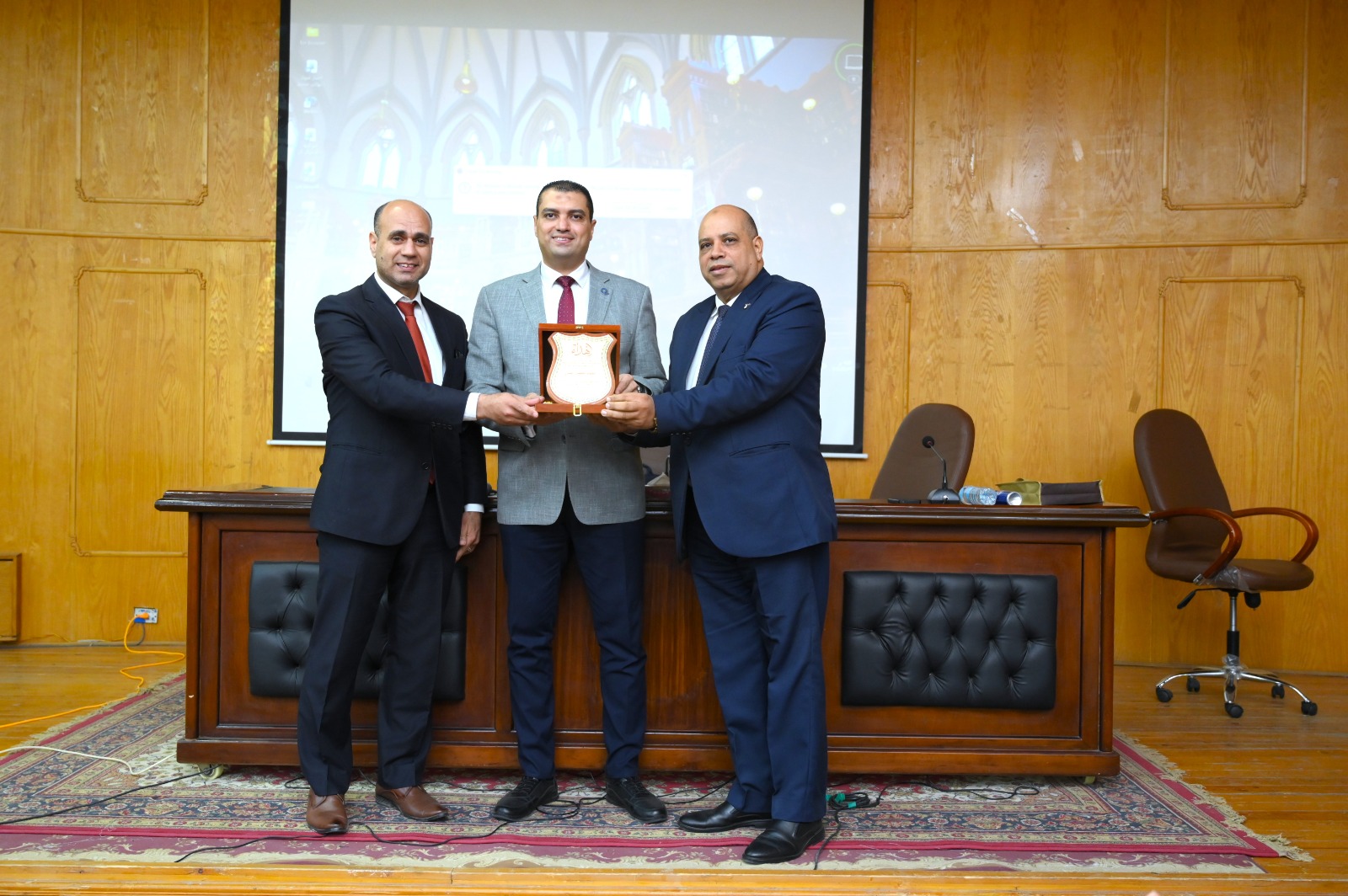
conclusion of the seminar, Prof. Ashraf Al-Abbasy and Prof. Wael Tobar honored
Dr. Mohamed Mohsen and presented him with the shield of the Faculty of Sports
Science in appreciation of his valuable participation.