
Under the patronage of Prof.
Sherif Mohamed Sabry El-Attar, Acting President of Fayoum University and Vice
President for Education and Student Affairs, the journal SHEDET, published by
the Faculty of Archaeology, has achieved a significant new research milestone.
This accomplishment, which reflects the journal’s notable progress and academic
leadership, is highlighted in the latest 2026 reports from *SciVal*—a global
analytics platform provided by the international publishing house Elsevier.
Prof. Mohamed Mo’tamad, Vice Dean
for Postgraduate Studies and Research at the Faculty of Archaeology, announced
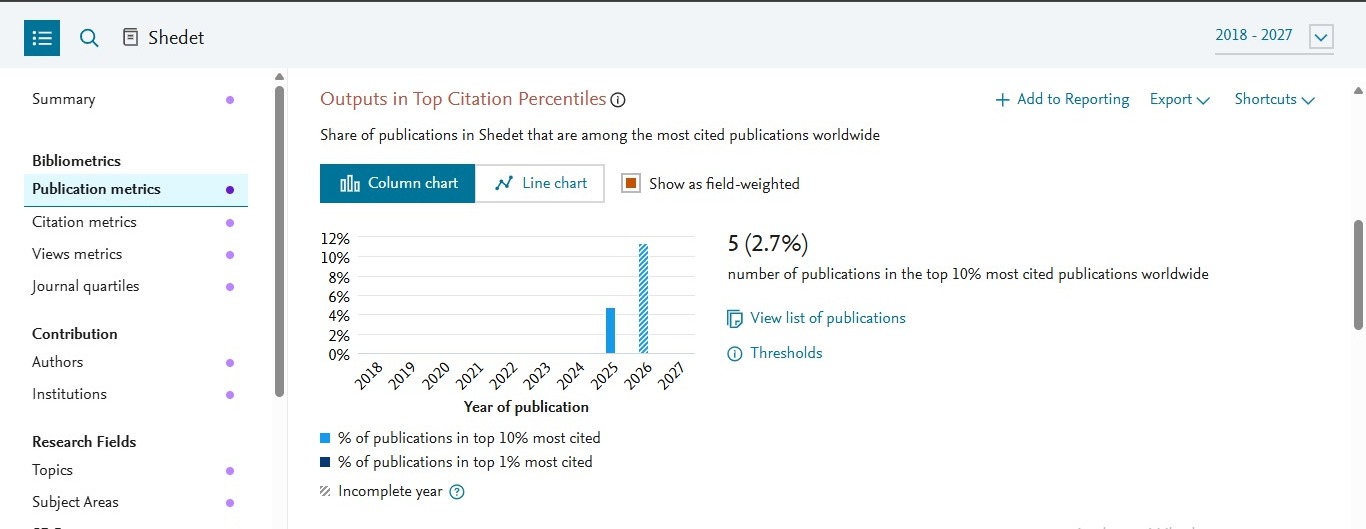
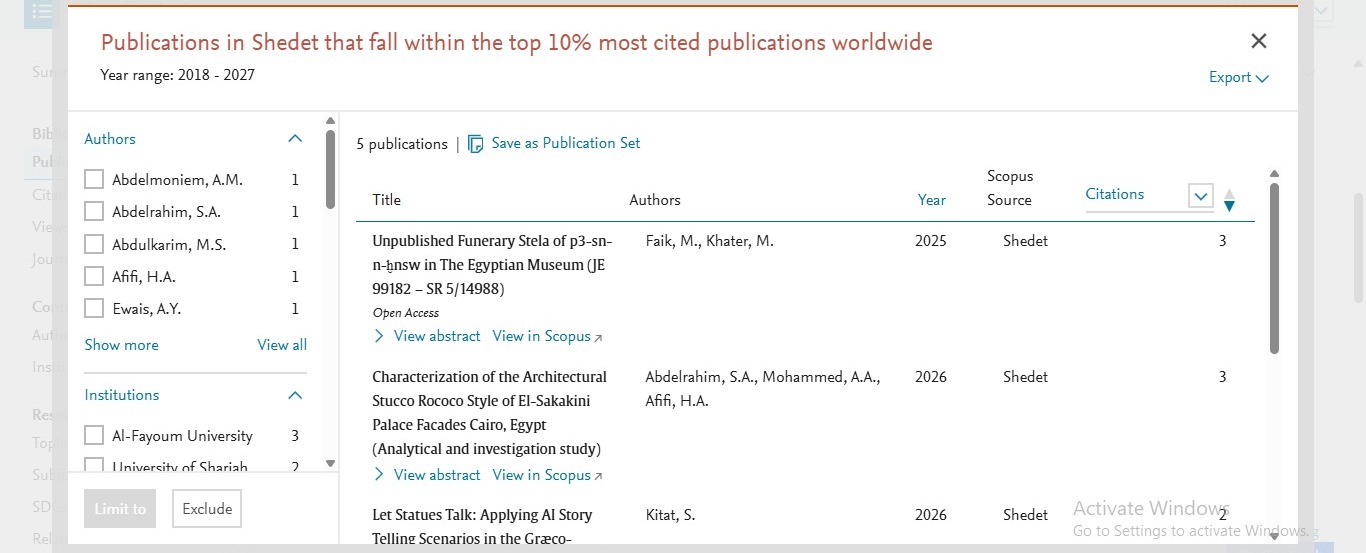
that *SciVal* data indicates that a portion of the journal’s published research
has been ranked among the top 10% most-cited outputs globally. Specifically,
2.7% of the journal’s total scientific output—and 11.4% of the research
featured in its most recent 2026 issue—fall into this highly cited category.
These research papers cover a
diverse range of innovative topics that bridge heritage and modern technology,
including the study, documentation, and restoration of antiquities, as well as
the application of artificial intelligence in the interpretation and
presentation of cultural heritage.
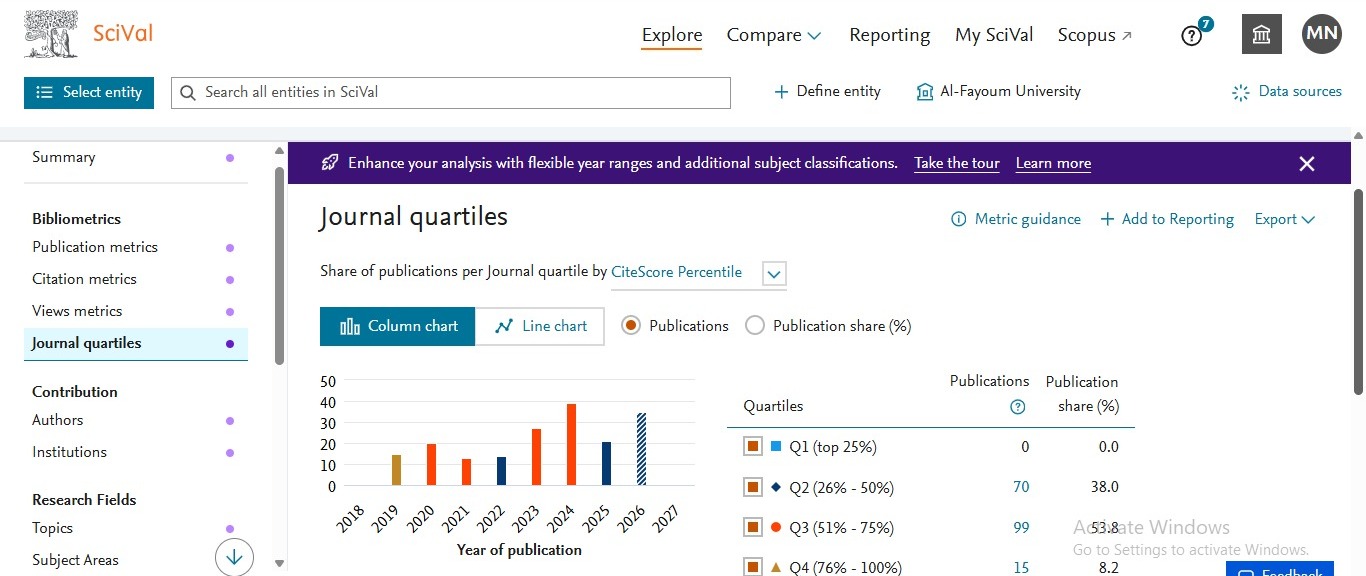
In terms of academic ranking, the
journal’s published research is well-positioned within recognized global
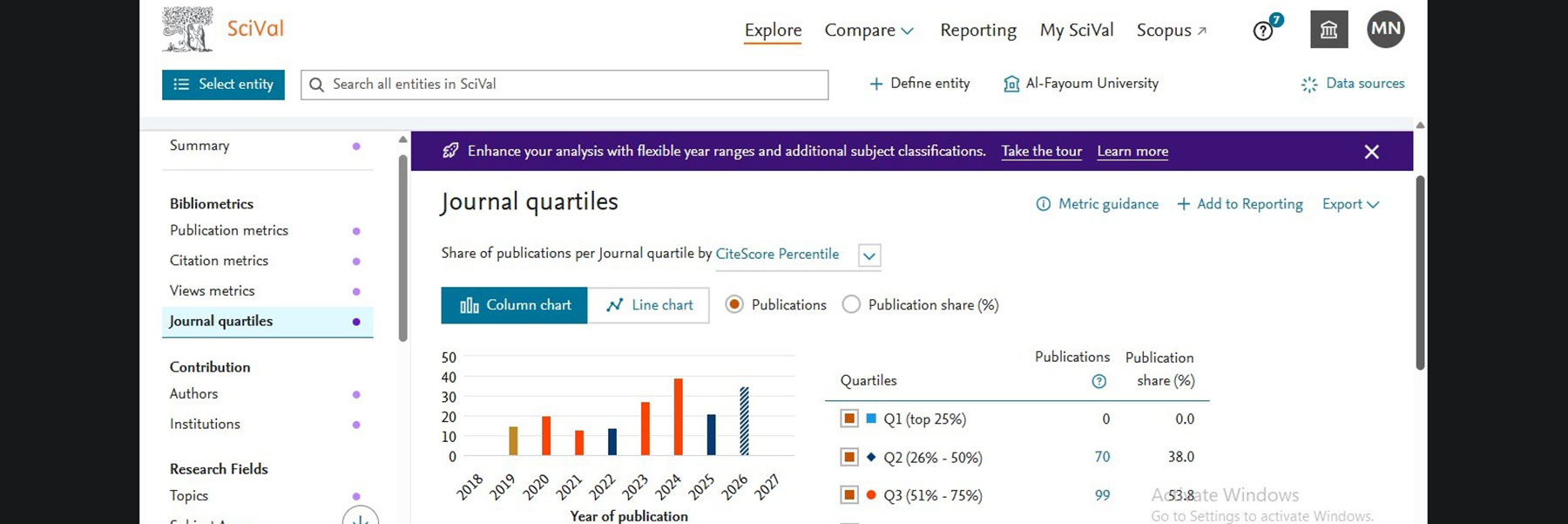
classifications; the majority of these papers fall into the second quartile
(Q2)—accounting for 38%—and the third quartile (Q3)—accounting for 53.8%—underscoring
the high quality and significant impact of the scientific content published.
This achievement marks a significant milestone, underscoring the journal
*Shedet*’s commitment to international quality standards in scientific
publishing. It contributes effectively to strengthening the journal’s global
research standing and supporting the advancement of scientific inquiry in the
fields of archaeology, history, and heritage.
Professor Sherif El-Attar extends his sincere
congratulations to the journal’s editorial board, advisory board, and
contributing researchers for this outstanding scholarly effort, wishing them
continued success and further progress in future international rankings.