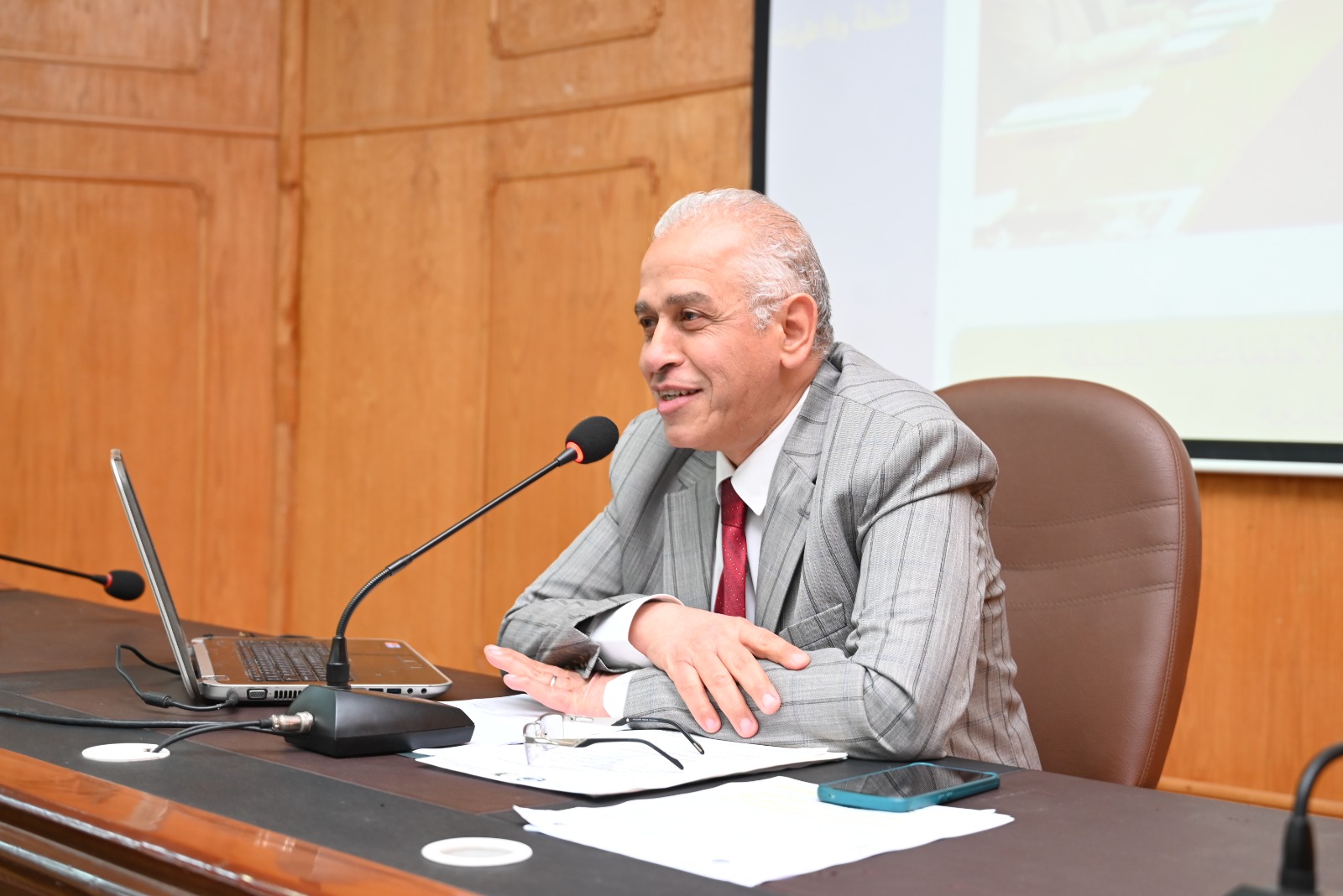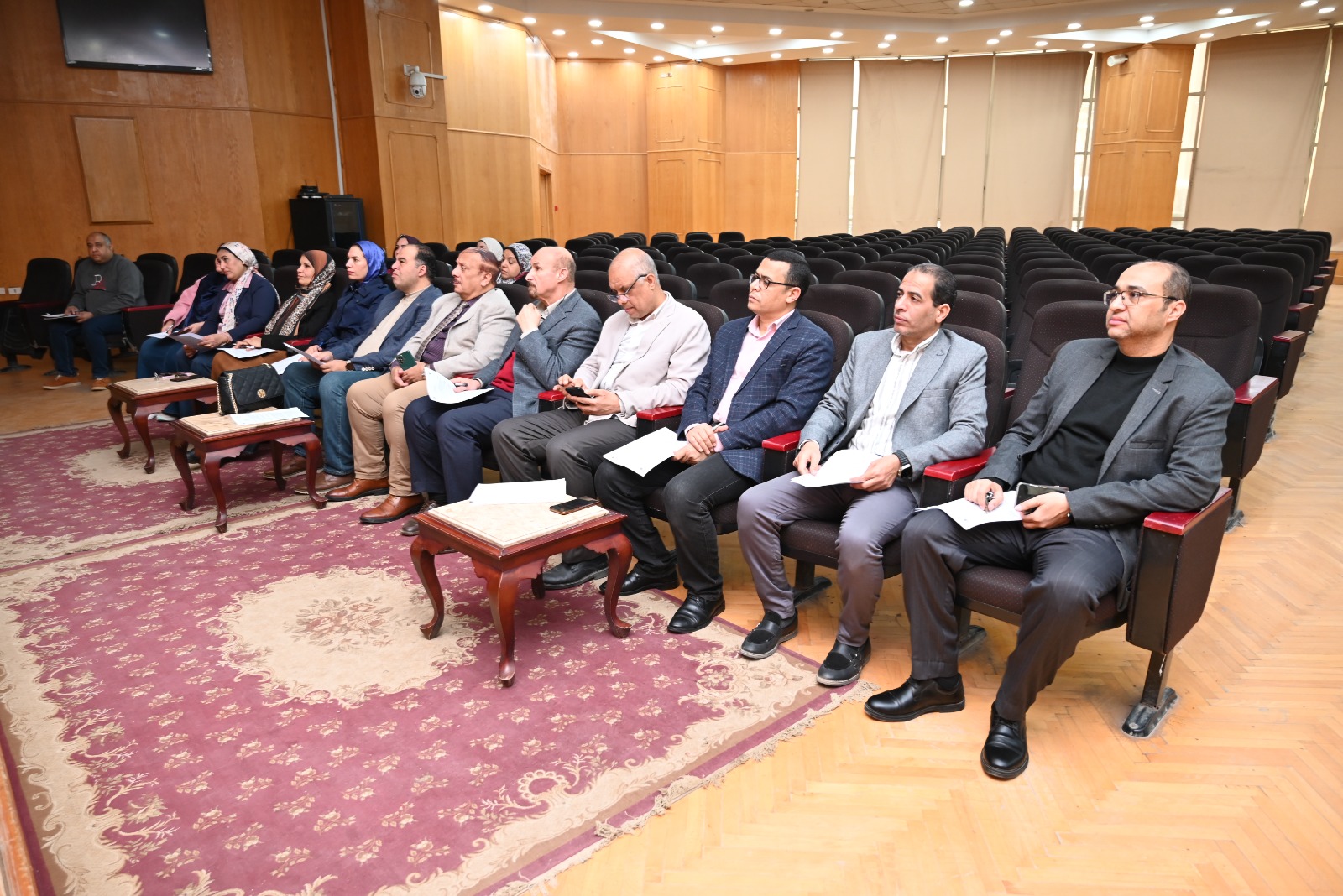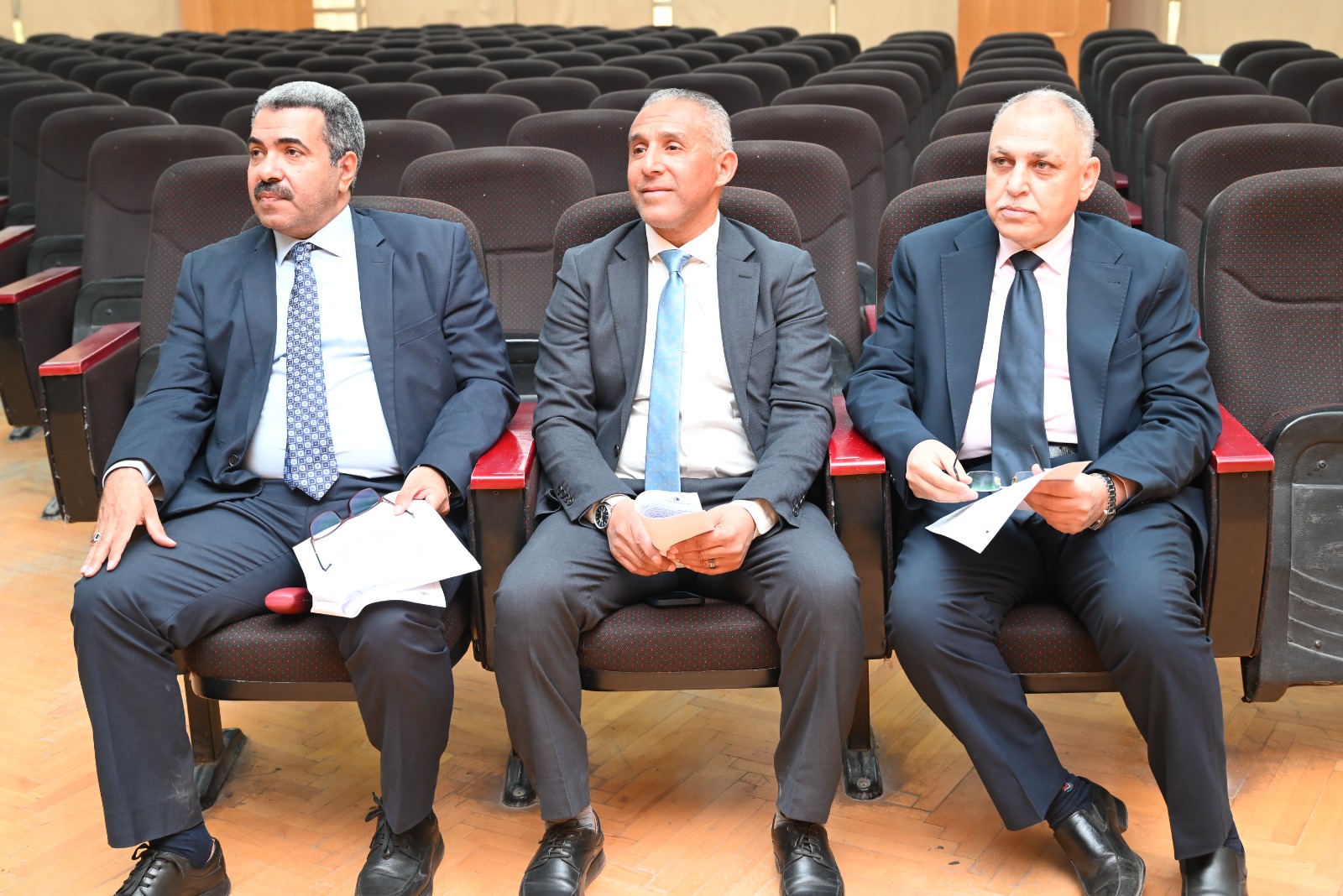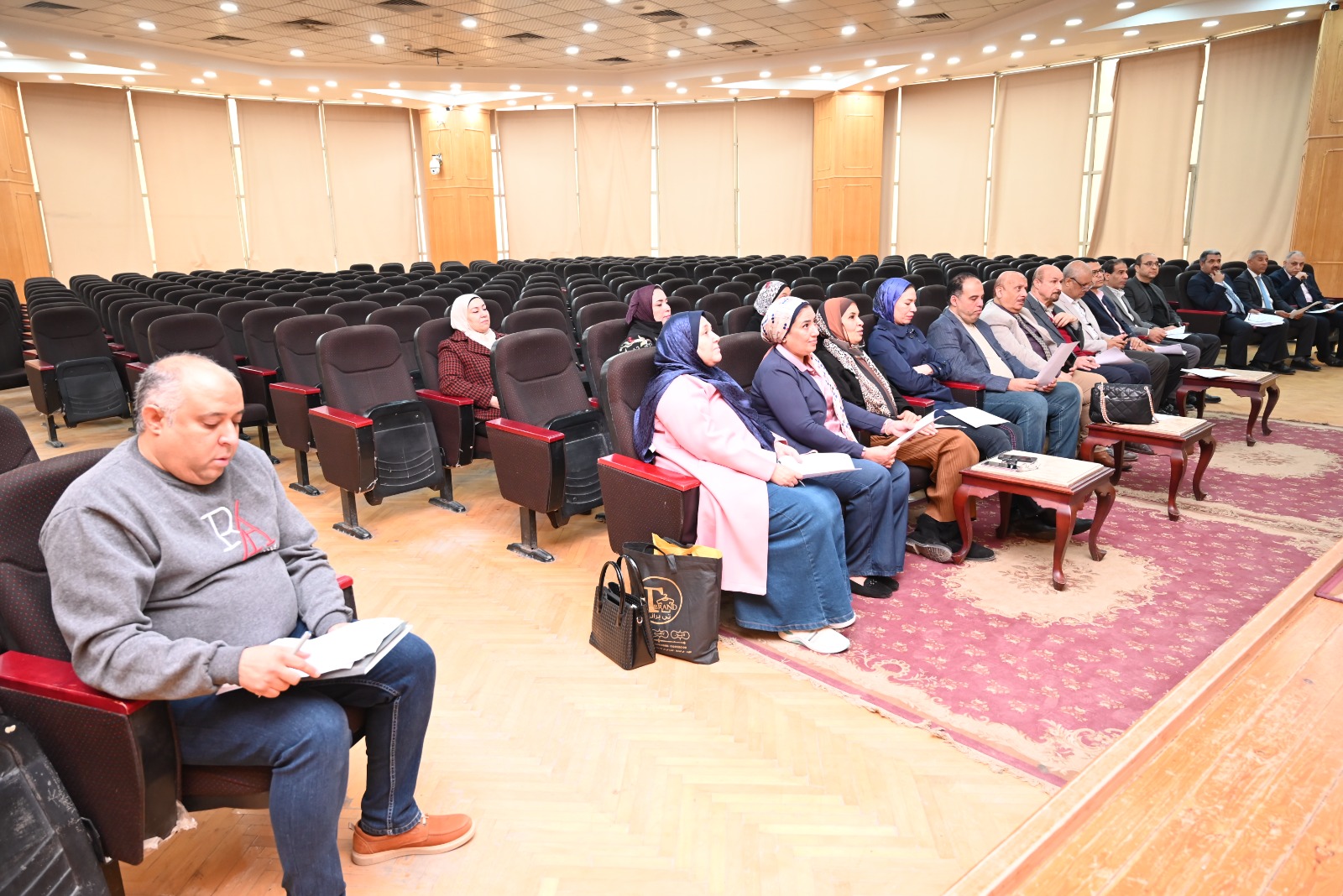



Under
the patronage of Prof. Yasser Magdy Hatata, President of Fayoum University, the
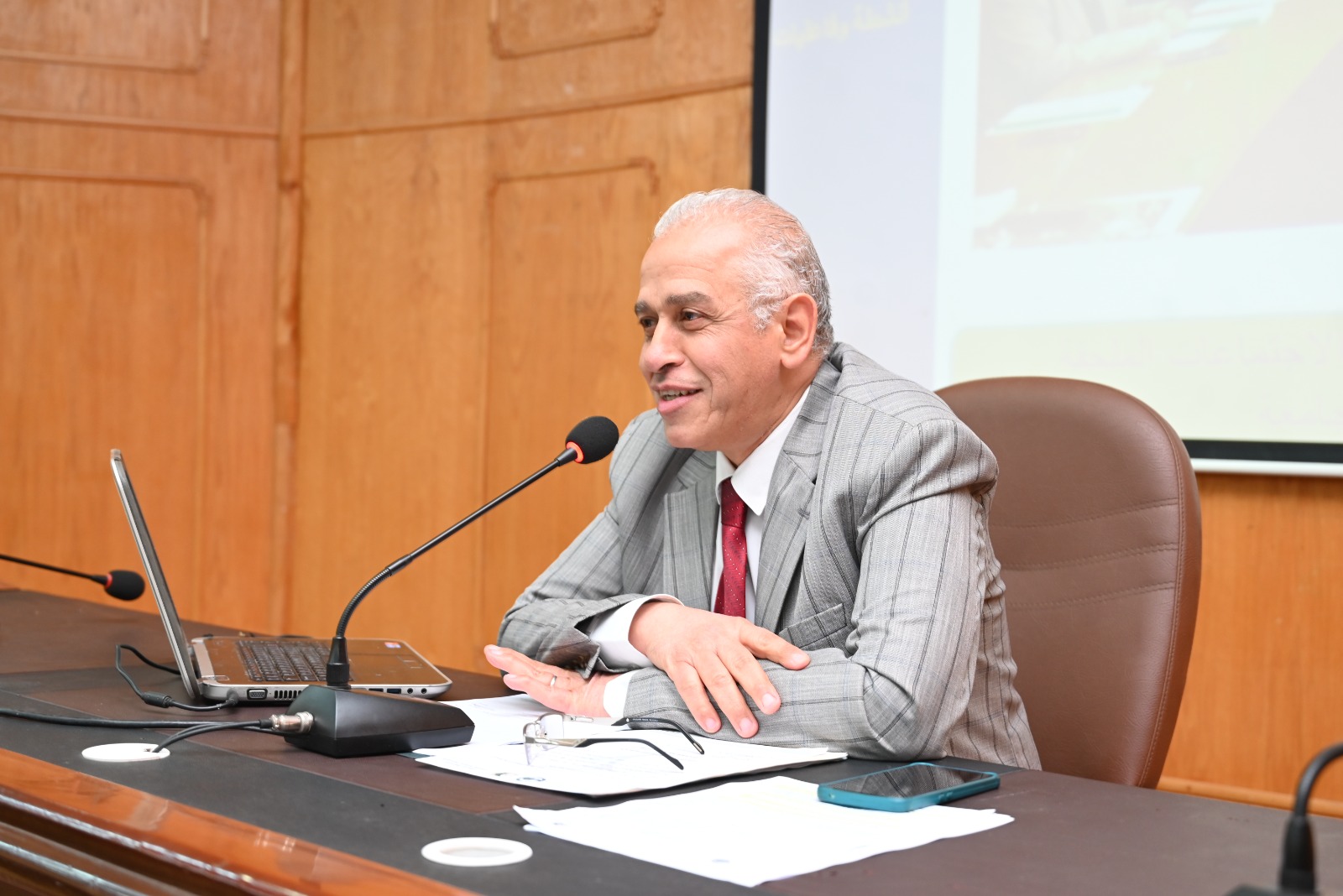
Council of Education and Student Affairs held its 232nd session,
chaired by Prof. Sherif El-Attar, Vice President for Education and Student
Affairs, in the presence of the esteemed members of the Council, on Monday,
March 16, 2026, at the University's Central Library.
During
the session, the Council was briefed on the emergency meeting of the Supreme
Council of Universities to discuss mechanisms for implementing presidential
directives regarding linking university academic programs to labor market needs
at the local, regional, and international levels. This includes preparing a
comprehensive study of the labor market landscape at the local, regional, and
international levels, in cooperation with various relevant entities, and
preparing periodic reports on the progress of implementation. Additionally, a
mechanism for periodic evaluation of the achievements of all universities in
this regard was established. A high-level committee has been formed, chaired by
Professor Dr. El-Sayed Abdel-Khaleq, Former Minister of Higher Education and
Scientific Research, and comprising several leading experts in various
scientific disciplines. This committee is to complete its work within a maximum
of three months and will undertake the following tasks:
- Reviewing existing academic programs and
specializations, and assessing their alignment with the needs of the local,
regional, and international labor market.
-
Analyzing university graduate
employment indicators and identifying gaps between educational outcomes and
labor market demands.
- Proposing the development and modernization of
regulations and academic programs to keep pace with technological and economic
advancements.
-
Studying the introduction of new
programs and specializations, particularly in interdisciplinary and advanced
technological fields.
-
Proposing the restructuring or
merging of programs and specializations that no longer meet labor market needs.
- Strengthening partnerships between universities
and the business sector across all fields.
-
Developing short- and medium-term
training plans for current students enrolled in these programs to connect them
with the labor market.
A committee shall be formed at
each university, chaired by the university president and including the vice
president for education and student affairs, as well as a number of experienced
individuals from within and outside the university.
The executive committee shall be
responsible for the following:
• General oversight of the implementation of the
outputs of the higher committee reports and the plans approved within the
university.
•
Coordination between various
sectors and relevant entities, both internally and externally, to achieve the
objectives.
•
Preparation of comprehensive
periodic reviews and reports on academic programs, with the aim of ensuring
their continued alignment with scientific advancements and labor market needs.
1.
Establish an annual Graduate Employability Index at the program level,
specifically including the activation of graduate units within the university,
graduate employment rates within one year of graduation, the alignment of jobs
with academic specializations, and employers' assessments of graduate skills.
2.
The university president may form subcommittees from the executive
committee in the university's colleges or institutes to perform certain tasks
assigned to them by the executive committee and to prepare periodic reports on
these tasks for submission to the executive committee.
3.
Task the sectoral committees of the Supreme Council of Universities with
monitoring the updating of academic regulations in accordance with the future
labor market landscape.