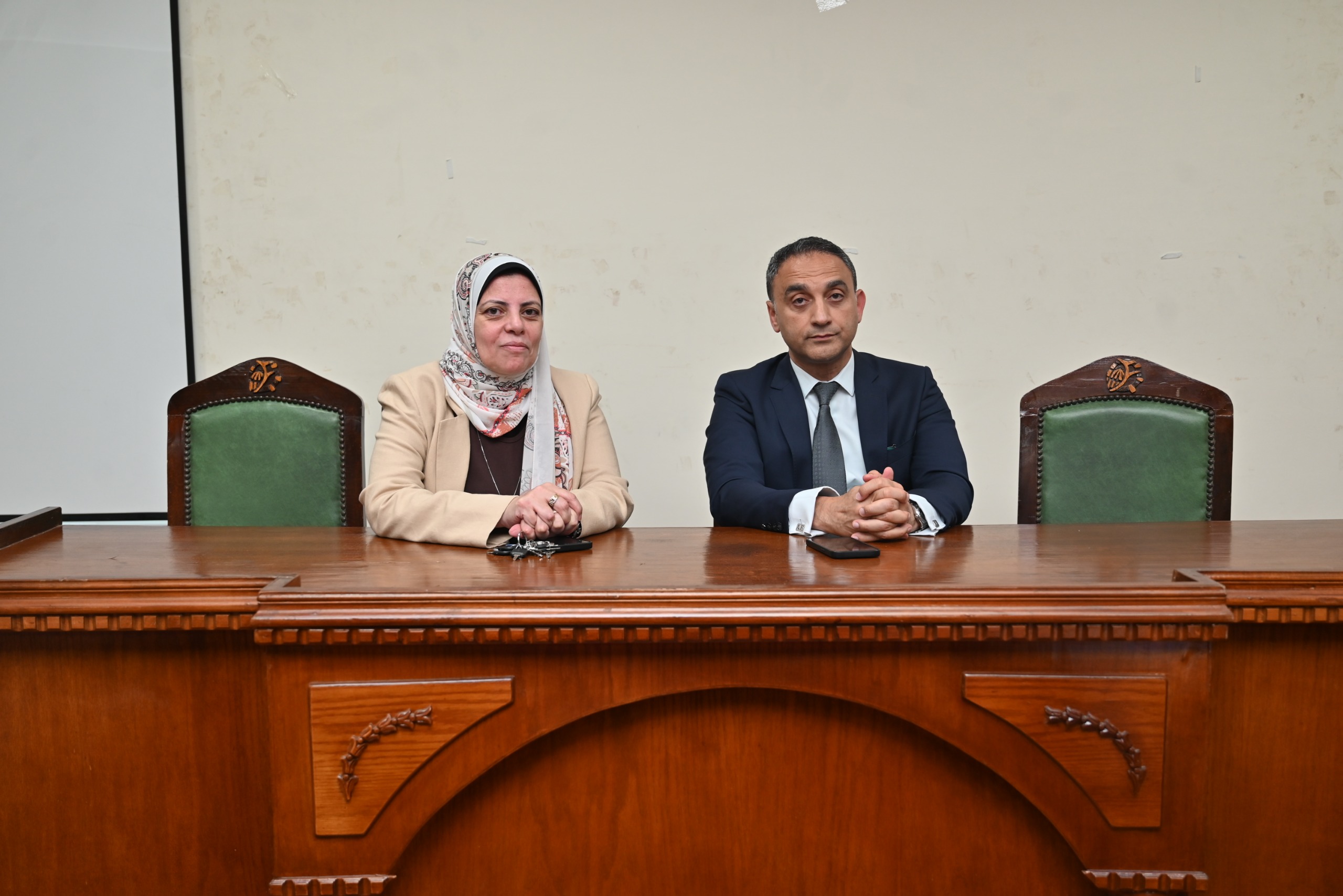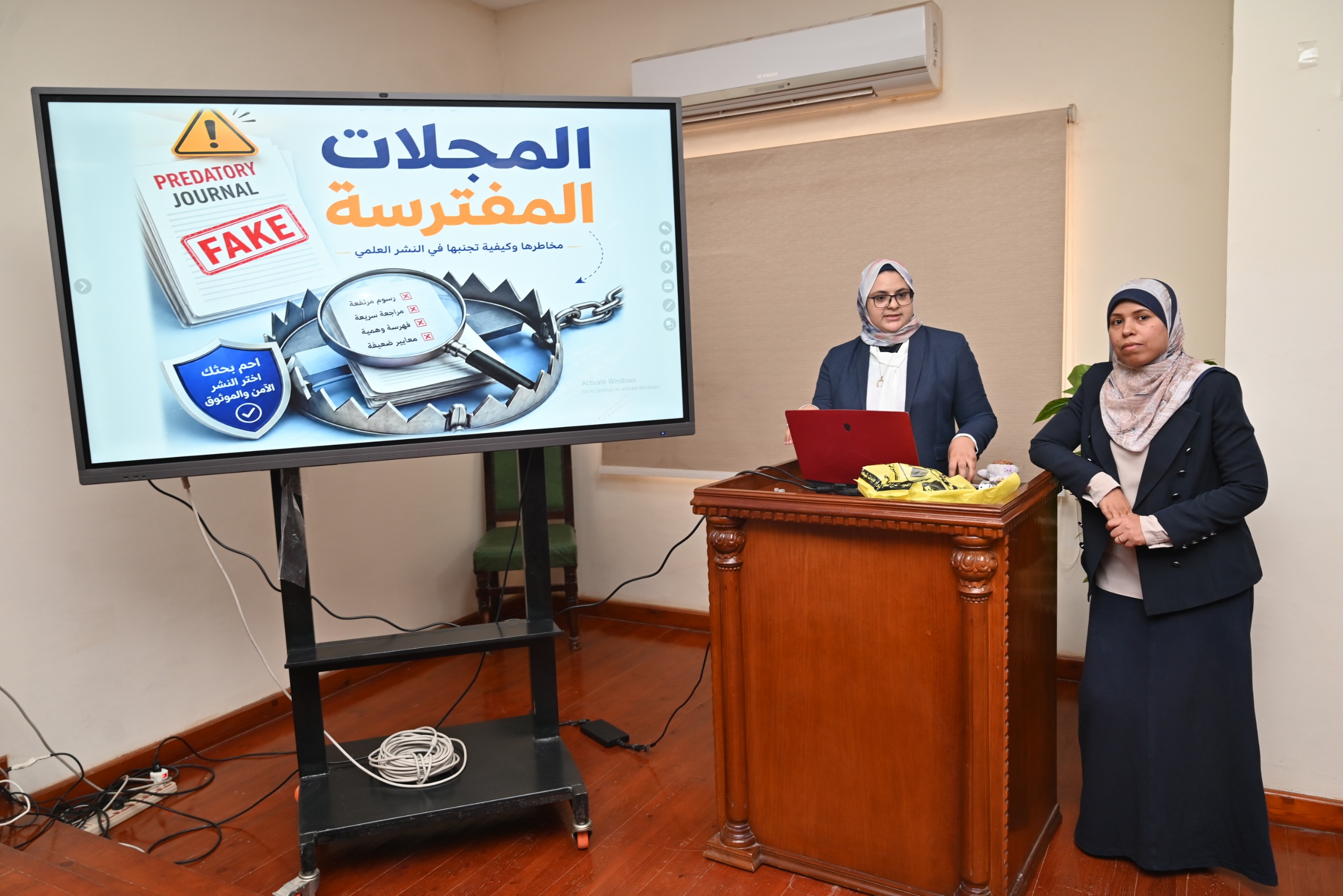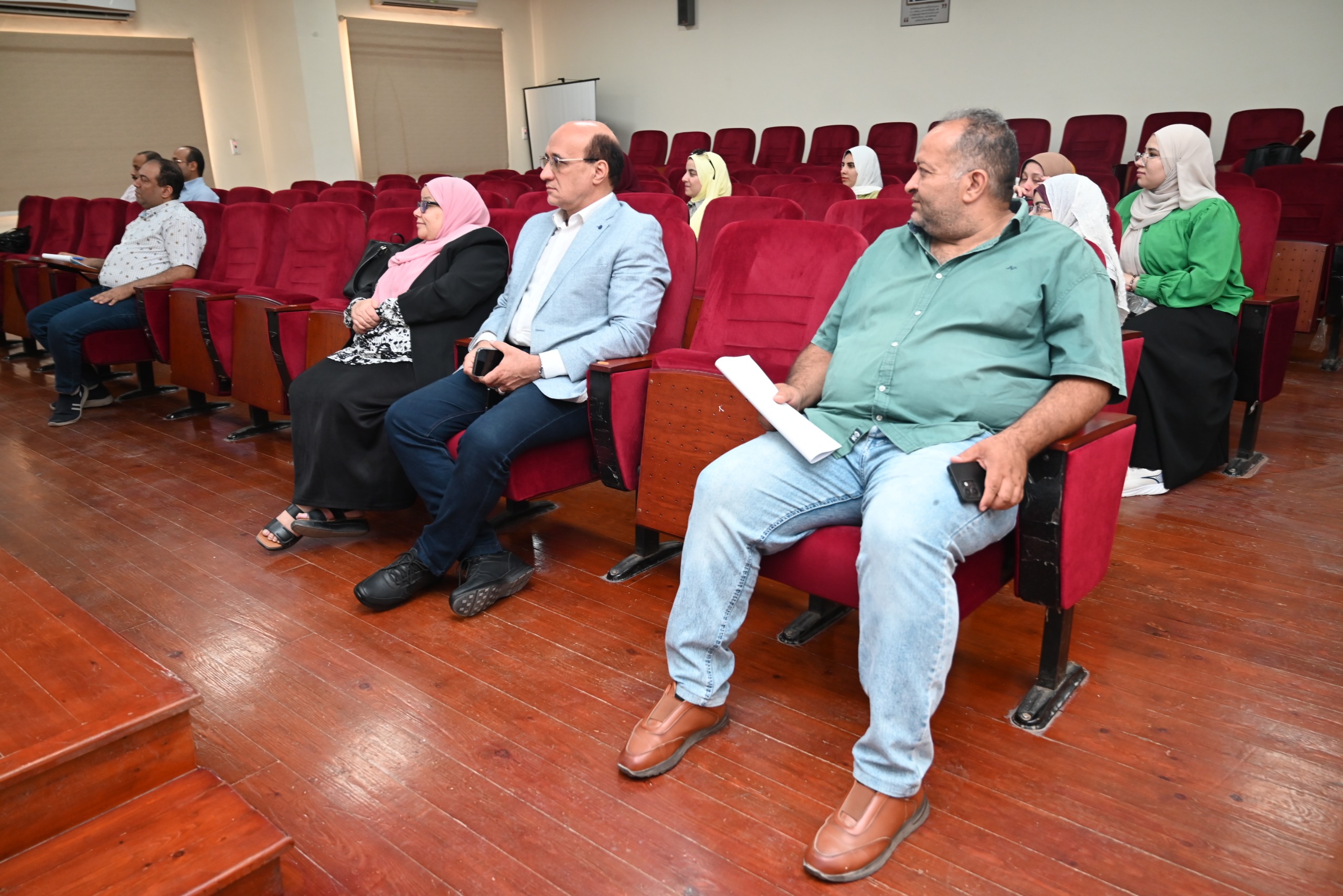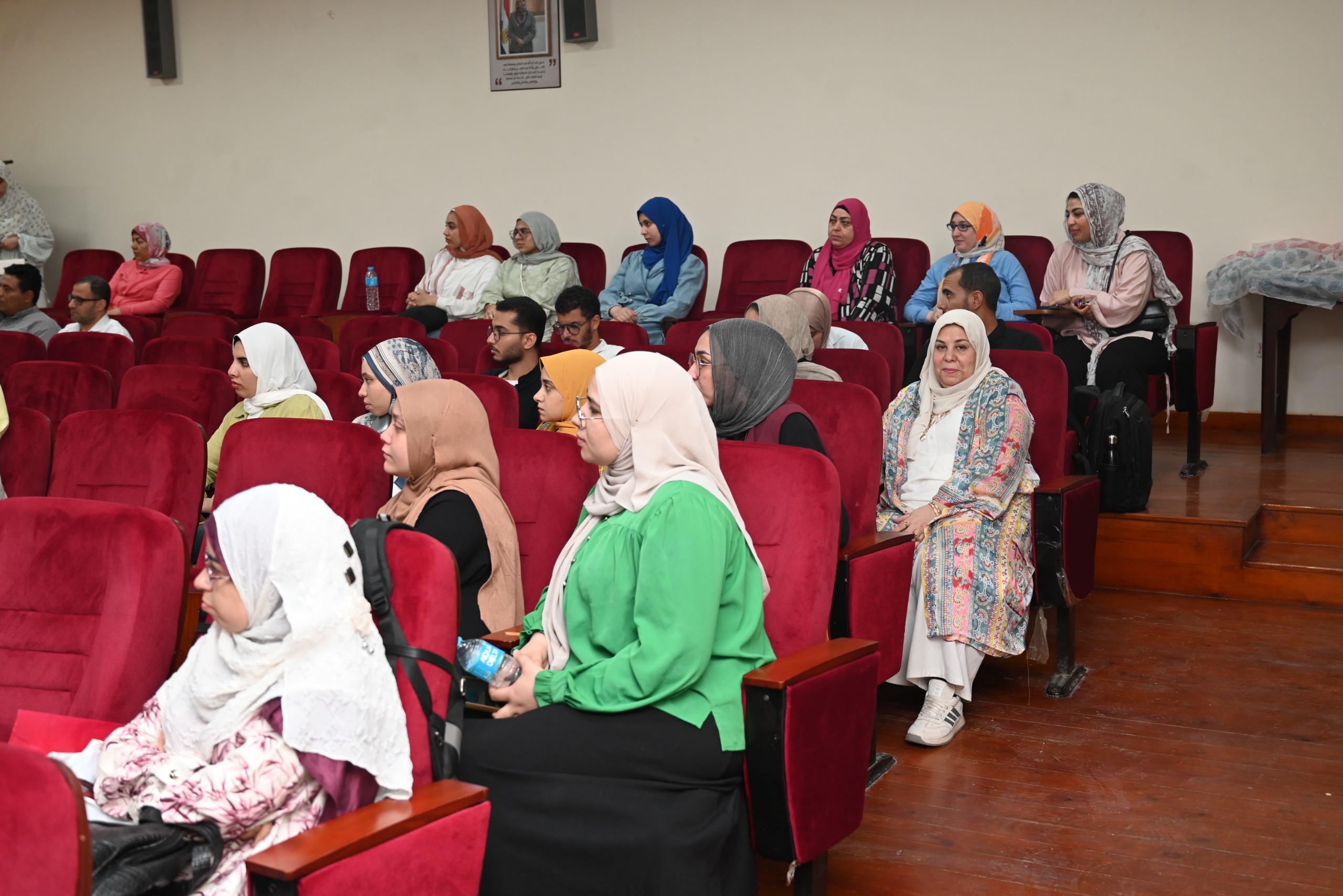



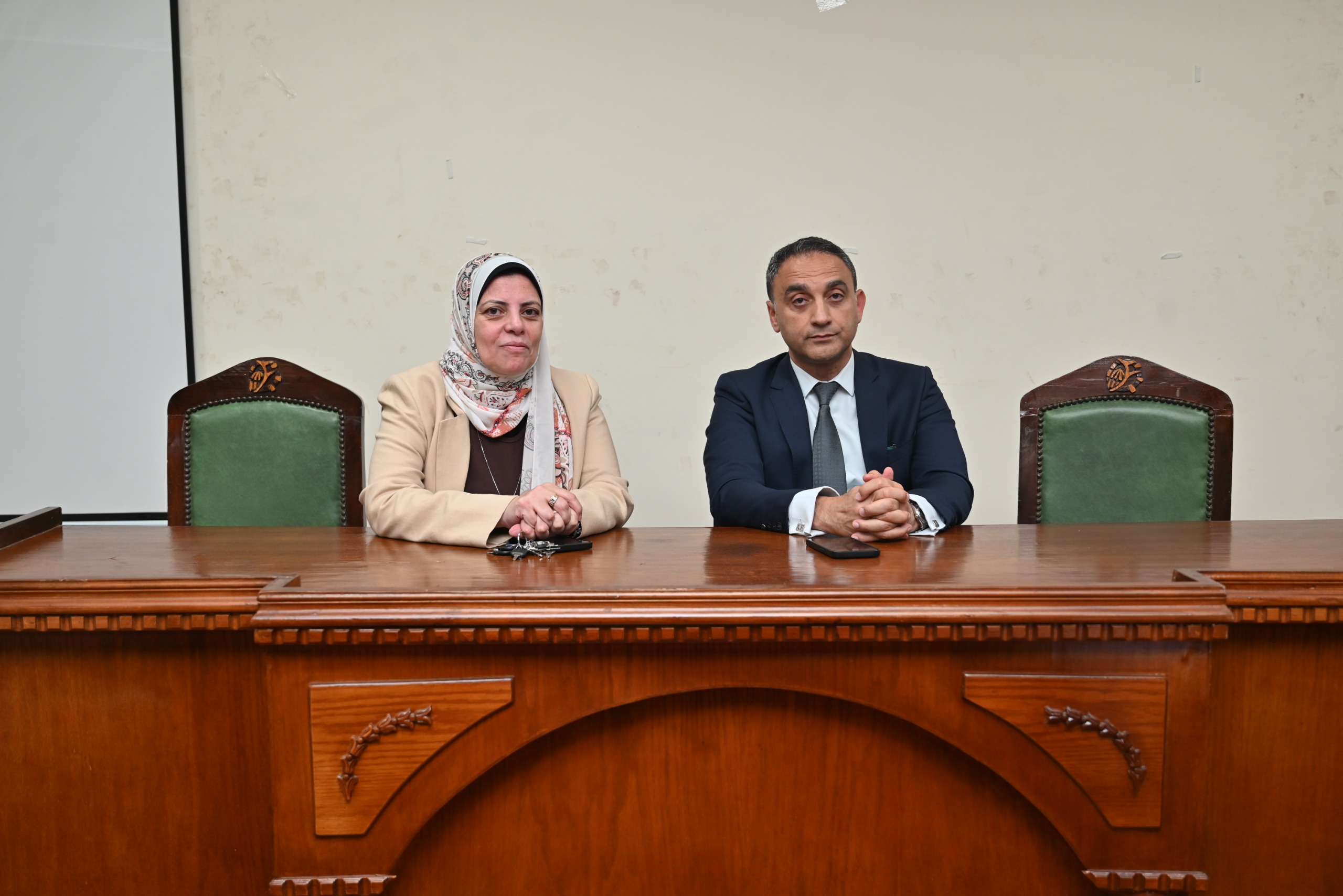
Under the patronage of Prof. Yasser Magdy Hatata, President of Fayoum
University, Prof. Assem El-Essawy, Vice President for Community Service and
Environmental Development and Supervisor of Postgraduate Studies, Cultural
Relations, and Research, attended a seminar organized by the Faculty of
Computers and Artificial Intelligence on "Predatory Journals: Challenges,
Risks, and Mechanisms for Verifying the Credibility of Scientific
Publication."
The seminar was also attended by Prof. Sherine Tayeh, Dean of the
Faculty, Prof. Somaya El-Sayed Gouda, Vice Dean of the Faculty of Science for
Postgraduate Studies, Cultural Relations, and Research, and a number of faculty
members, researchers, and students. The seminar was held on Sunday, June 21,
2026, at the Faculty.
The seminar was presented by Dr. Esraa El-Hariri, Assistant Professor in
the Department of Computer Science, and Dr. Asmaa Hashem, Lecturer in the
Department of Information Systems at the Faculty of Computers and Artificial
Intelligence.
The seminar addressed the definition of predatory journals, which are
journals that claim to be scientific but do not adhere to established
scientific publishing standards, with their primary goal being to collect publication
fees from researchers. The seminar also discussed key indicators that help
researchers identify these types of journals, including: unclear editorial
board information, promises of very short acceptance times, claims of indexing
in unknown databases, poorly designed websites containing grammatical errors
and inaccurate information, and the sending of repetitive emails to
researchers.
The seminar also defined the concept of scientific publishing, its
importance, objectives, and various forms. It reviewed the essential steps of a
sound scientific publishing process and highlighted criteria that help
researchers verify the credibility of scientific journals. These criteria
include scientific journal evaluation indicators such as the Impact Factor, CiteScore,
Quartiles, and scientific citations, as well as the role of global scientific
research databases and researcher evaluation indicators.
Examples of predatory journals were reviewed, and mechanisms for
examining and verifying their credibility were explained. These mechanisms
include searching global databases such as Scopus and Web of Science, reviewing
the journal's website data, examining the editorial board, and verifying the
International Standard Serial Number (ISSN).
The meeting also included practical examples from several scientific
journals to assess their reliability and distinguish between accredited
scientific journals and predatory journals.