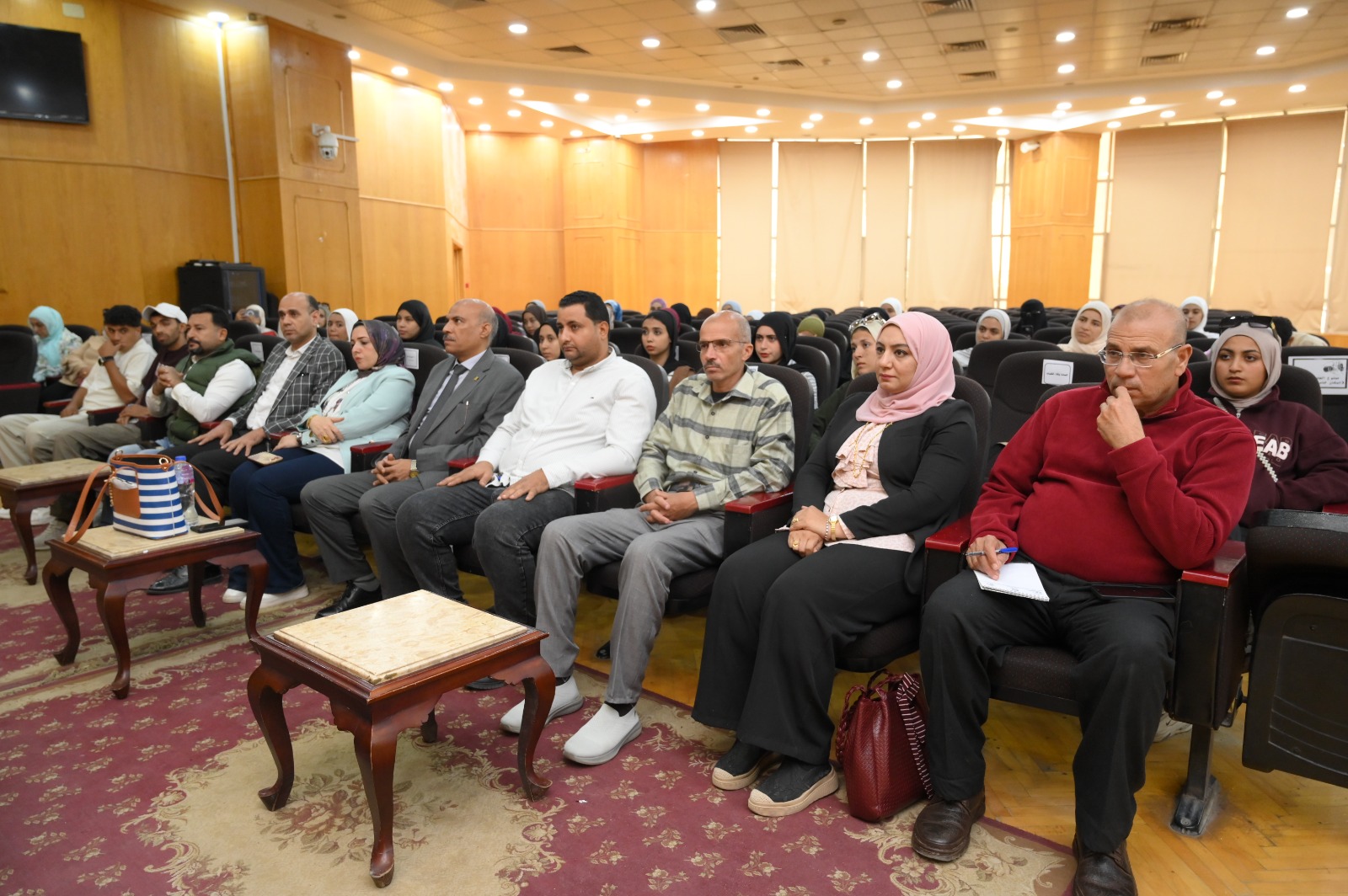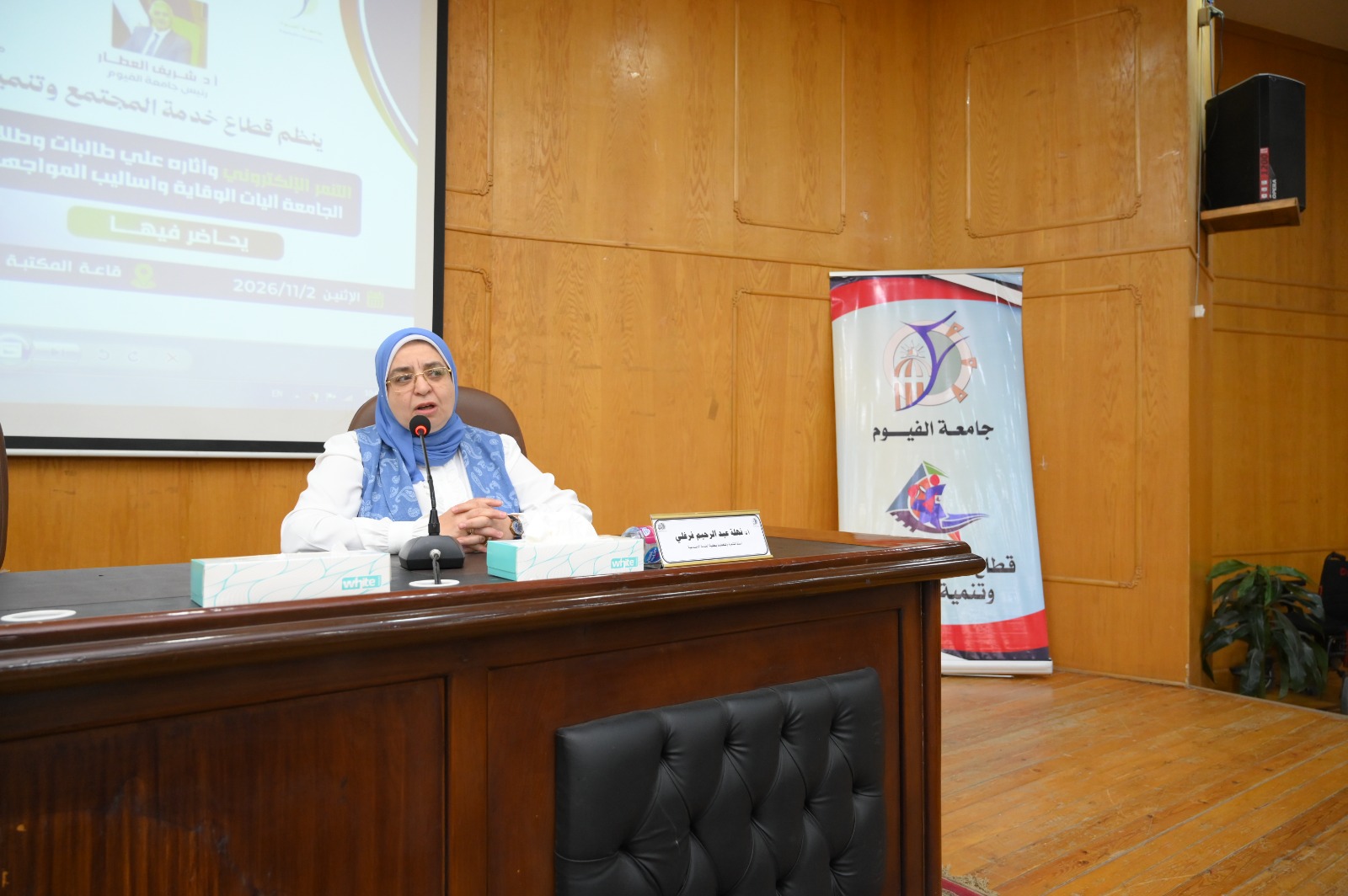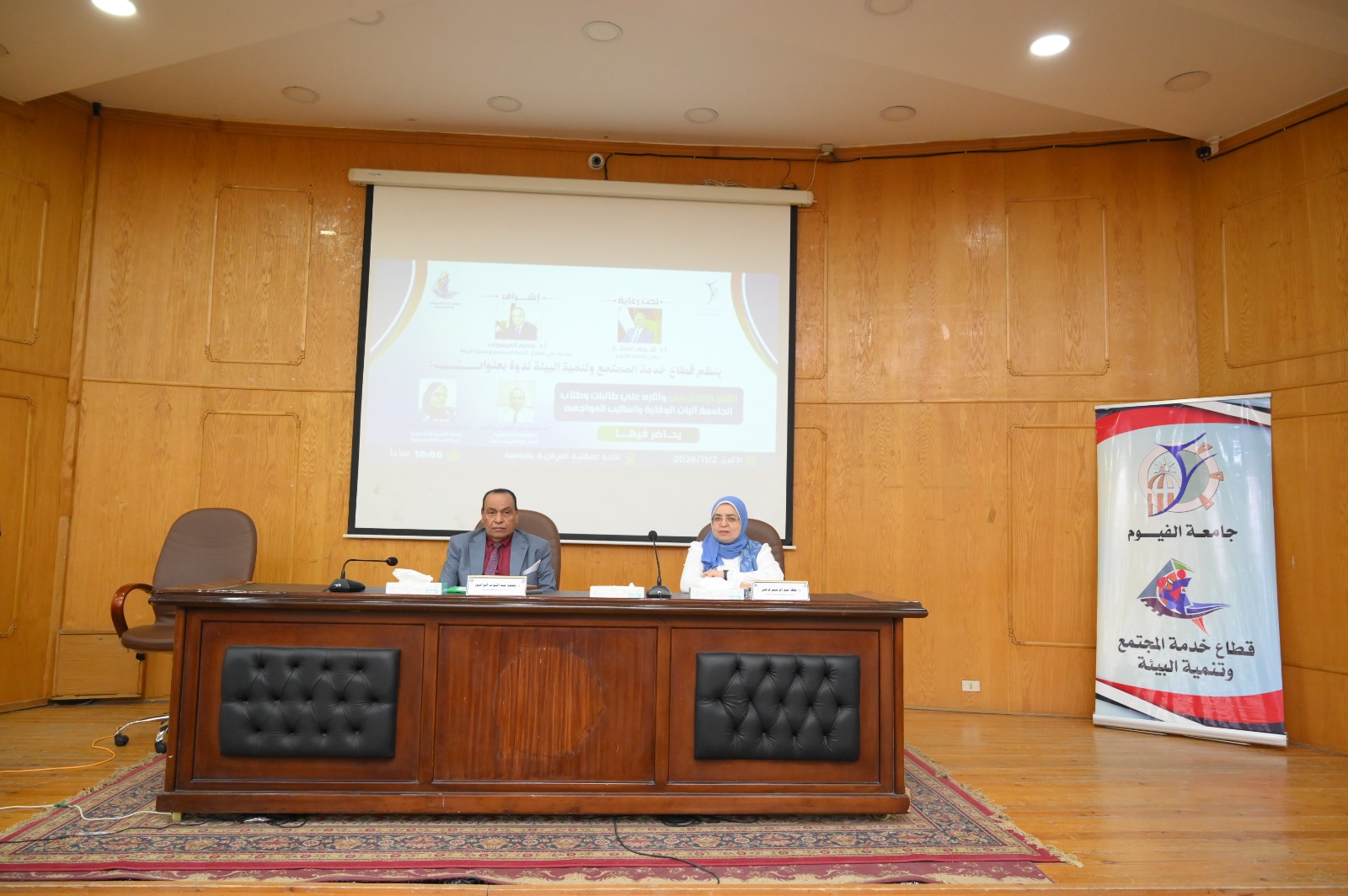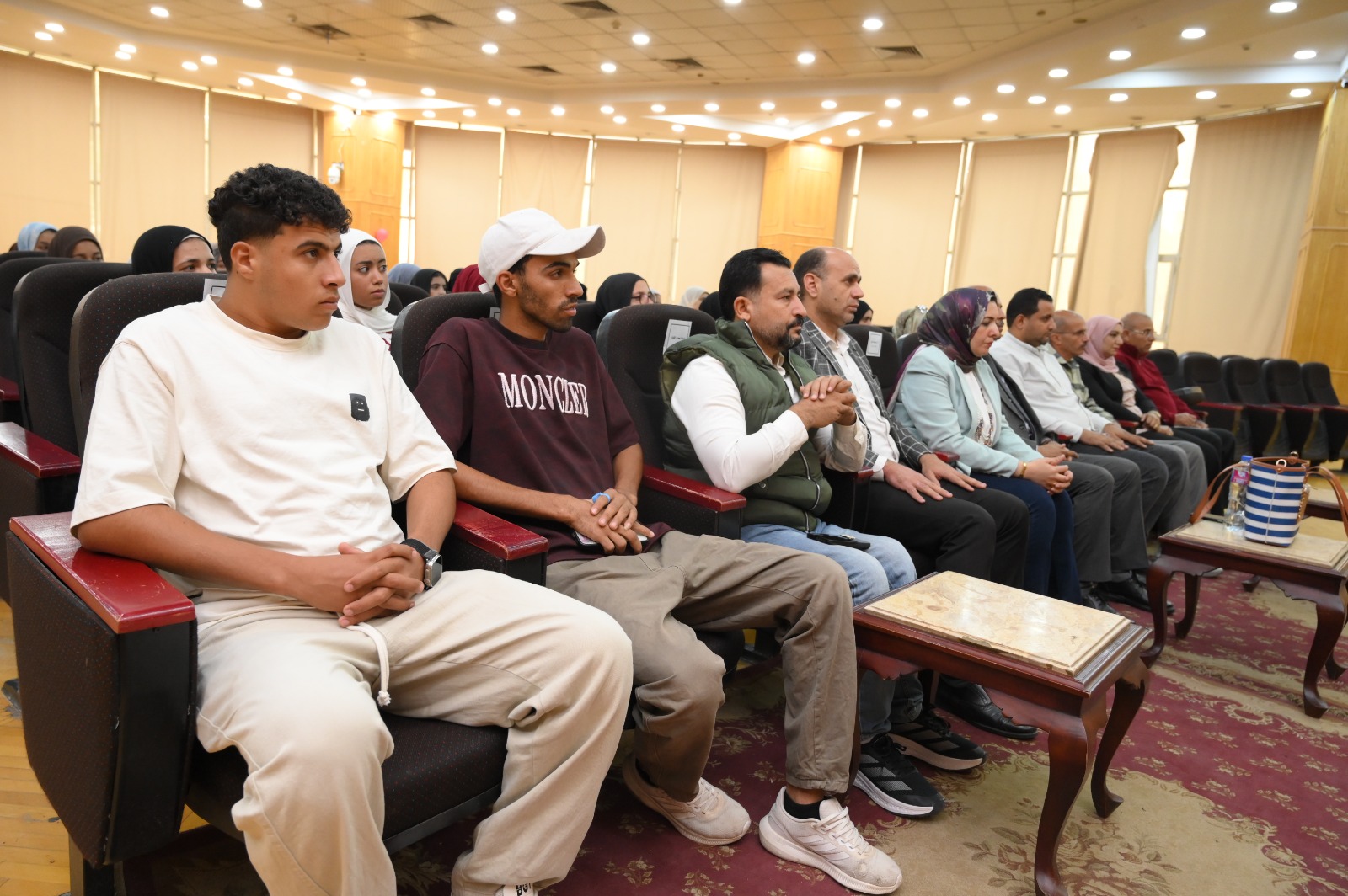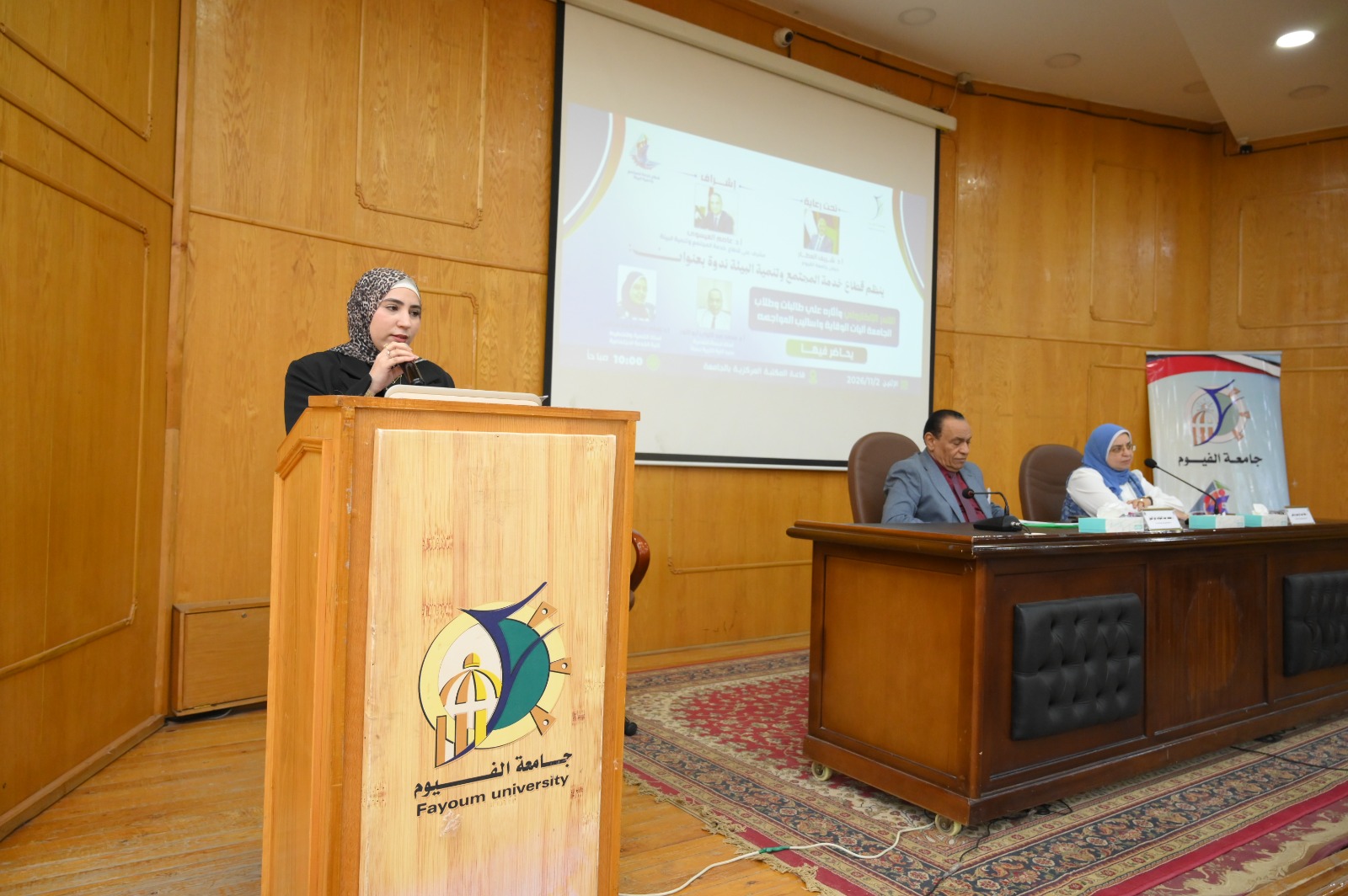



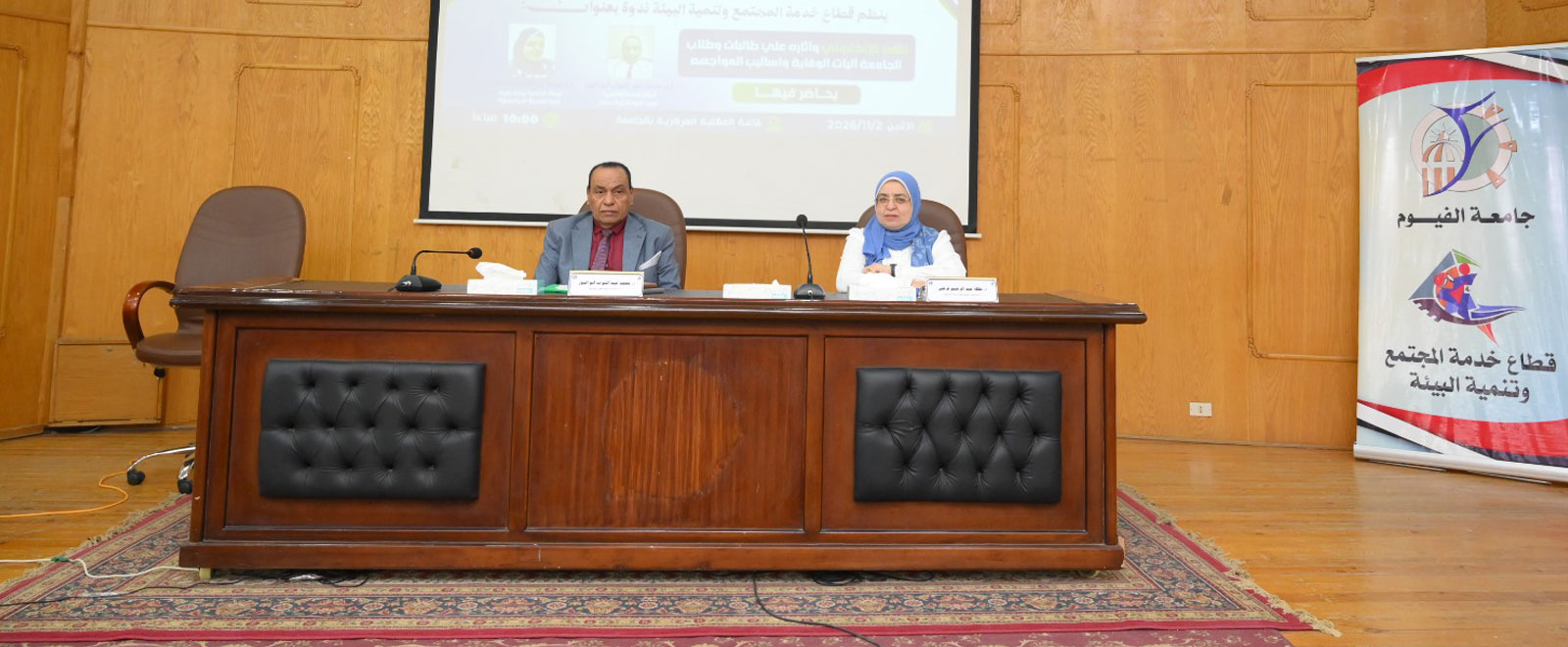
Under the patronage of Prof.
Sherif Mohamed Sabry El-Attar, Acting President of Fayoum University and Vice
President for Education and Student Affairs, and under the supervision of Prof.
Assem El-Essawy, Supervisor of the Community Service and Environmental
Development Sector, an awareness seminar was held today, Monday, November 2,
2026, at the university’s Central Library. The seminar, titled
"Cyberbullying and Its Impact on University Students: Prevention
Mechanisms and Remedies," featured presentations by Prof. Mohamed
Abdel-Tawab Abu El-Nour, Professor Emeritus and Former Dean of the Faculty of
Education, and Prof. Nahla Abdel-Rahim, a professor at the Faculty of Social
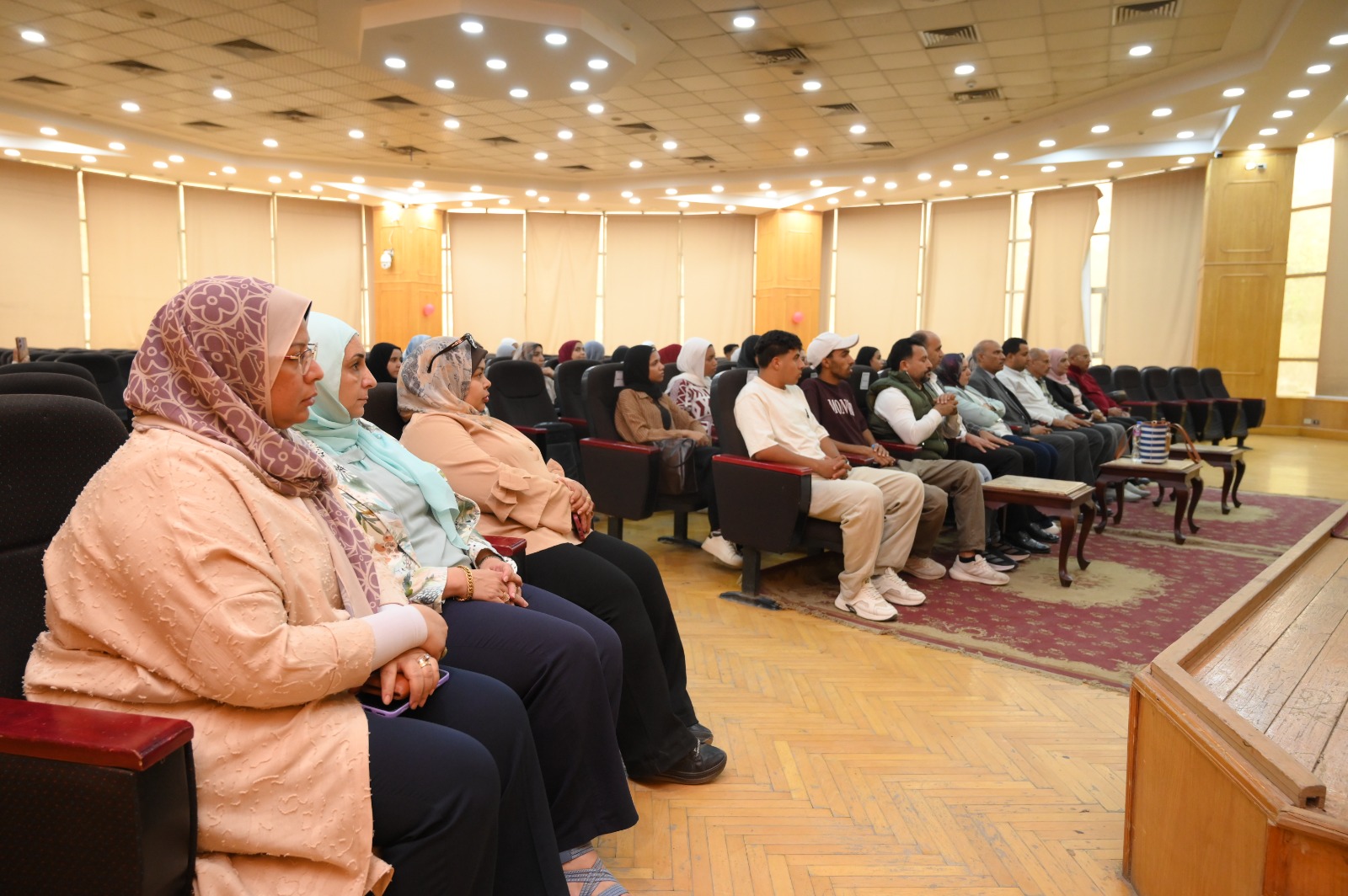
Work. The event was attended by Mr. Abdel-Nasser Bakry, General Director of
Community Service and Environmental Development, alongside various faculty
members, administrative staff, and students.
Prof. Mohamed Abdel-Tawab
emphasized the importance of fostering digital literacy among students and
promoting a culture of safe and responsible social media use. He highlighted
the need to counter negative behaviors that adversely affect students' mental
and social well-being. He noted that cyberbullying has emerged as a significant
challenge for young people, given the widespread use of social media platforms
and digital applications. Cyberbullying manifests in various forms—such as
mocking others, spreading rumors, defamation, extortion, and the unauthorized
sharing of personal images or information—all of which lead to serious
psychological, social, and academic consequences, including a loss of
self-confidence, anxiety, social isolation, and diminished focus and academic
performance. He explained that the methods for addressing and managing cases
affected by this type of bullying involve providing psychological and social
support to students, establishing secure channels within the university for submitting
complaints, and handling incidents seriously in accordance with relevant
regulations and laws. Furthermore, it entails raising awareness about how to
document abuse and report it through the appropriate platforms and relevant
authorities.
For her part, Prof. Nahla Abdel
Rahim emphasized that confronting this phenomenon requires a concerted effort
from all educational, familial, and societal institutions. This can be achieved
by spreading awareness about the dangers of cyberbullying, informing students
of their digital rights, and encouraging them to report any abuse they
encounter—while also urging them not to engage with offensive comments or
participate in the dissemination of content that targets others.
She noted that preventive
measures against cyberbullying include safeguarding personal data, utilizing
privacy and security settings, refraining from sharing sensitive images or
information with untrusted parties, and verifying information before circulating
it. Additionally, it involves fostering values of respect, tolerance, and the
acceptance of differences among students.
Concluding the seminar, Mr. Abdel
Nasser Bakry stressed that building a safe university environment goes beyond
merely addressing cyberbullying after it occurs; it begins with instilling a
culture of mutual respect and digital responsibility. This contributes to the
psychological and social protection of students and helps prepare a generation
capable of engaging with modern technology in a conscious and positive manner.